
Spring · Fall
Lawn Aeration & Overseeding in Fond du Lac, WI
Aeration and overseeding to bring thin or compacted turf back to life.
Quick answer
When should commercial lawns be aerated and overseeded in Fond du Lac, WI?
Wisconsin Extension identifies late summer through early autumn, roughly mid-August to mid-September, as a key lawn-seeding window. Aeration is most relevant where compaction or excessive thatch is present. Assess the cause of thin turf first, then confirm site conditions, included areas and aftercare in your plan.
What’s included
Lawn Aeration & Overseeding
Core aeration and overseeding help thin or compacted turf recover density and color. We schedule both as part of your seasonal maintenance plan so the work fits around your operating hours.
- Core aeration of lawn areas
- Overseeding of thin or bare areas
- Post-service watering and care guidance
- Scheduling around tenant and business hours
- Coordination with mowing and property maintenance
Exact scope, timing and pricing are confirmed with you in your plan.
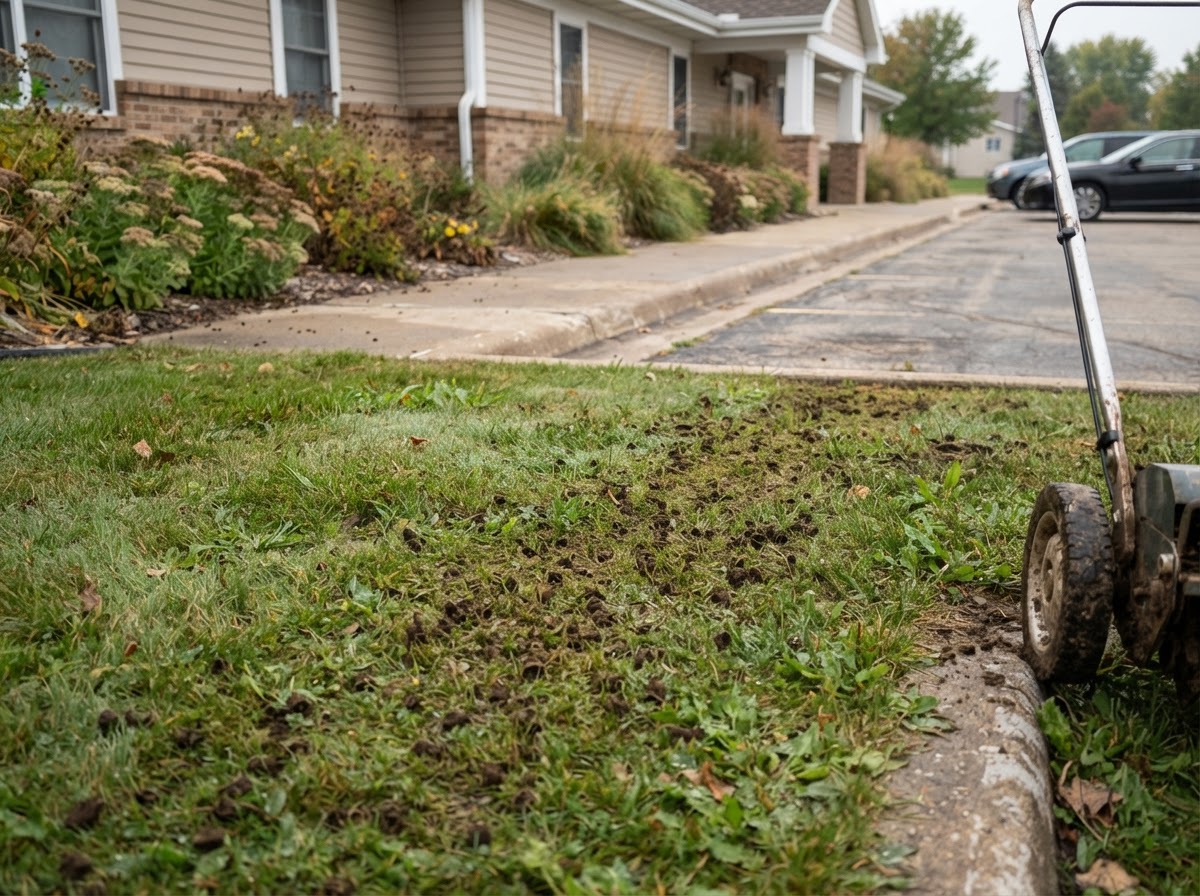
Thin or worn turf is a visible symptom, but the right response depends on what is happening below and around the grass. Compaction, thatch, shade, drainage and repeated use can each affect establishment. Loof's Landscaping and Snow Removal LLC helps commercial property managers decide whether aeration, overseeding or a different follow-up is appropriate for the mapped areas; the work, timing and pricing are confirmed in the property plan.
Mid-August to mid-September
Wisconsin Extension's general best lawn-seeding period
About 1 inch
Thatch level Extension describes as excessive
About 3 inches
Seedling height at which Extension advises mowing can begin
Diagnose the stressed area before choosing renovation
Start by marking where turf is thin, bare or repeatedly damaged. Compare those locations with footpaths, building approaches, shade, drainage and the property's routine use. A recurring bare strip beside a walk may need a different response from an area affected by compacted soil or a broad thin lawn. Overseeding can help with recovery of thin or damaged Wisconsin lawns, but first assess why the turf declined; adding seed alone may not correct a continuing stressor.
Look for evidence rather than assuming every weak area needs the same package. Wisconsin Extension notes that compacted soil restricts infiltration, oxygen and root growth; an inability to push a pen into dry soil is one simple indicator. A site review can also consider thatch and whether the ground is suitable for aeration. The purpose is to connect each proposed task to an observed condition and distinguish turf renovation from separate drainage, traffic or landscape work.
Schedule around Wisconsin's seeding window and site conditions
UW–Madison Extension identifies late summer through early autumn, roughly mid-August to mid-September, as Wisconsin's best lawn-seeding period. Its fall overseeding guidance describes the common window through about September 10–15. Early fall is also identified as prime time for core aeration and overseeding. These are regional horticultural guidelines, not fixed service dates or a guarantee that conditions at a particular property are suitable on a particular day.
Spring aeration is possible, but Extension notes it can increase weed-seed germination pressure. No numeric soil-temperature threshold was established in the reviewed sources, so this page does not use one. Work should be planned against the site condition, scope and appropriate local guidance. A manager can use the seasonal window to start planning early, then confirm the actual timing with the provider rather than treating a suggested date as a promise.
Use core aeration only where the lawn condition calls for it
Core aeration is most relevant where soil is compacted or thatch exceeds about one inch. UW–Madison Extension describes thatch above one inch as excessive and potentially harmful; a moderate layer under about three-quarters of an inch can be beneficial and does not require aeration solely to remove thatch. This distinction helps prevent an unnecessary treatment from being presented as automatic for every lawn or every overseeding project.
Soil condition also matters at the time of work. Extension advises aerating when soil is slightly moist, not wet or very dry: wet ground can bog down equipment, while dry ground can resist tine penetration. If the soil is dry, its guide says watering one or two days beforehand may help. These are horticultural recommendations, not a schedule guaranteed by the service. Confirm which zones need aeration and whether the conditions on the planned day support it.
Prepare seed contact and select for the site
Seed must contact soil to establish. UW–Madison Extension's establishment guide describes removing debris or using slit seeding, lightly raking seed into the top quarter-inch, then tamping or rolling. The appropriate preparation depends on the existing turf and proposed method, so ask what will be done in the areas included. Ensure that preparation is distinct from correcting an underlying drainage or compaction problem that requires different work.
Seed selection should reflect sunlight, soil, use and site conditions. Wisconsin Extension's establishment guide provides species-specific seeding rates, but no single seed mix has been verified for every Fond du Lac commercial property. Rather than choosing by habit, ask what species or mix is being proposed and why it fits each zone. The plan should identify the included area, preparation and seed selection basis; do not treat a general rate table as a property-specific recommendation.
Set a realistic establishment and watering plan
Newly seeded areas need moisture while seedlings establish. UW–Madison Extension advises keeping seedbeds moist and describes irrigating at least daily for two to three weeks until uniform germination; its guide gives about three to five minutes, or one-eighth to one-quarter inch, per watering as an example, while cautioning against runoff or floating seed. Actual need depends on weather, soil, seedbed and irrigation output. Do not convert the example into a fixed guarantee or imply that watering is included unless the plan says so.
Coordinate the handoff among the overseeding provider, irrigation contact and mowing team. Mark the treated area, identify who is responsible for watering and agree how concerns will be reported. Extension advises beginning mowing when seedlings reach roughly three inches. That point supports a readiness discussion; it does not establish a promised establishment date. Ask who determines that the new turf is ready and whether follow-up care is part of the contracted scope.
Agree on the establishment handoff
New seed needs care after the installation work ends. Identify who will keep the seedbed moist, how mowing decisions will be made and how the area will be marked for other maintenance teams.
Separate overseeding from other lawn treatments
A renovation proposal may prompt questions about fertilizer, weed management or topdressing, but those are not interchangeable with aeration and seeding. Wisconsin law restricts phosphorus turf fertilizer except for grass establishment by seed or sod during the establishment growing season, or when a soil test completed within 36 months shows deficiency, according to the DATCP summary reviewed. This is a paraphrase of a source summary, not legal advice; property managers should confirm current requirements before approving fertilizer use.
Weed-control timing for established turf should not be applied indiscriminately to newly seeded areas. UW–Madison Extension identifies early-to-mid fall as a favorable period for treatment of perennial broadleaf weeds in established lawns, while the source cautions against assuming that timing applies to new seed. Ask whether any proposed additional treatment is appropriate for the specific seeded area and follow current product instructions. No fertilizer, pesticide or weed-control service is implied by an aeration and overseeding scope.
Plan around how commercial grounds are used
At offices and retail sites, managers may prioritize visible approaches while protecting nearby walking routes from conflicting maintenance activity. Healthcare and industrial properties can identify access constraints; schools and churches can communicate when outdoor use affects scheduling. Apartment communities, HOAs and condo boards may need a map that distinguishes common turf from areas with different responsibilities. The point is to describe how each lawn zone functions before work is scheduled, not to claim a single treatment layout for all property types.
Where traffic repeatedly crosses a lawn, discuss whether the cause can be addressed alongside seed and aeration. If turf depends on irrigation, agree how moisture will be maintained during establishment. If mowing is separately contracted, provide the treated-area boundaries and the agreed mowing readiness point. These handoffs help protect a renovation from conflicting activity and make clear what is included, what requires another provider and what the property team must arrange.
What to prepare and what to ask your provider
Before a site review, mark thin and bare sections, recurring foot traffic, shaded zones, drainage observations, irrigation coverage and any recent landscape changes. If possible, describe when the concern appeared and whether it occurs after rain, dry weather or use. Gather the current grounds plan and identify areas that should stay accessible. Decide who can approve a changed scope and who will coordinate the watering and mowing handoff after work.
Ask what evidence supports aeration, which zones will be overseeded, how seed selection fits the site, what preparation is included, and who handles establishment care. Ask how current soil and weather conditions affect scheduling and what readiness criteria will apply before mowing. Confirm whether fertilizer, weed treatment or irrigation work is excluded or separately proposed. Loof's is licensed, bonded and insured in Wisconsin; the plan confirms included work, timing and pricing. No outcome, fixed frequency or uniform recovery time is promised.
Benefits of core aeration and overseeding
Core aeration and overseeding address the underlying conditions that cause thin, weak turf — not just the visible symptoms. Aeration relieves compaction so water, oxygen and nutrients reach the root zone, while overseeding introduces improved grass varieties into thin or damaged areas. Together they help restore density, color and resilience to lawns that have taken a beating from traffic, drought or winter stress. For commercial properties, that means a healthier, more attractive lawn that holds up better through the seasons.
The benefits go beyond appearance. A denser lawn competes better with weeds, reduces bare spots that turn to mud, and improves water infiltration so irrigation and rainfall are used efficiently. Proper aftercare — watering and mowing handoff — protects the investment so new seed establishes rather than washing away or drying out. For property managers, the benefit is a lawn that recovers from stress instead of declining year over year.
- Relieved soil compaction — water, oxygen and nutrients reach the root zone where they are needed.
- Restored turf density — overseeding fills thin and bare areas with improved grass varieties.
- Better weed competition — a denser lawn crowds out weeds naturally.
- Improved water infiltration — irrigation and rainfall used efficiently rather than running off.
- Protected investment — clear aftercare handoff so new seed establishes successfully.
Commercial properties we serve with aeration and overseeding
Different commercial properties in the Fond du Lac area develop turf stress in different ways. Loof's serves commercial, industrial and apartment properties — we do not service single-family homes or residential driveways. Each property type has its own traffic patterns, shade conditions and wear zones.
- Office buildings — where frontage turf and entry approaches set a professional tone for tenants and visitors.
- Retail centers and shopping plazas — where customer foot traffic and cart paths create compacted, worn areas.
- Apartment and multi-family complexes — where shared lawns serve residents and pets across multiple buildings.
- Industrial and commercial facilities — where truck traffic and parking edges compact turf and stress grass.
- Healthcare and school properties — where high-use lawns need recovery timed around operating schedules.
- HOA and condo associations — where common-area turf needs clear boundaries and board-level agreement on scope.
The Loof's approach to aeration and overseeding
Our approach starts with diagnosing the cause of thin turf rather than assuming aeration is always the answer. We walk the site to map bare areas, assess compaction, shade, drainage and repeated traffic, and review whether seeding alone will address an ongoing stressor. If compaction or excessive thatch is present, core aeration is appropriate; if not, we say so rather than performing work the lawn does not need.
Once the plan is set, we confirm which zones will be aerated and seeded, how the seed mix fits the light, soil and use of each area, and what aftercare the property team is responsible for. Newly seeded turf needs a clear watering and mowing handoff — including who waters and when mowing may resume. We connect the work with mowing, irrigation and bed care so treated areas are protected. Communication is consistent: you know what is included, what follow-up is needed and who to contact. No fabricated guarantees — just a qualified assessment, a clear plan and service you can verify.
Why choose Loof's for lawn aeration and overseeding
Property managers in the Fond du Lac area choose Loof's because professional turf renovation should solve the problem, not just schedule a visit. One point of contact handles aeration alongside mowing, irrigation, bed work and snow — so the treated areas are protected by the rest of the grounds plan. Priorities, zone scope and aftercare are set before the work begins, and documented service records give you accountability to every property you manage.
Our approach is built on diagnosing the cause first, recommending aeration only where conditions warrant, and coordinating aftercare so new seed establishes. Communication is consistent — you know how to reach us and how concerns are handled. We are licensed, bonded and insured in Wisconsin. No invented awards or fabricated statistics: just experienced crews, clear plans and service you can verify.
Commercial lawn aeration and overseeding for Fond du Lac properties
Thin or worn turf can affect office entries, retail frontage, healthcare grounds, industrial sites, schools, apartment communities and HOA or condo common areas. Before choosing aeration or seed, map bare areas and consider compaction, shade, drainage and repeated traffic; seeding alone may not address a continuing stressor. Wisconsin Extension identifies mid-August to mid-September as a key lawn-seeding period. Property teams in Fond du Lac and Malone can use a site walk to identify priorities. See commercial lawn overseeding in Fond du Lac for service context. Confirm suitable conditions and actual timing rather than treating the seasonal window as an appointment promise.
Core aeration can be considered when soil is compacted or thatch exceeds about one inch; it is not an automatic step for every lawn. Ask what evidence supports aeration, which zones will be seeded, and how the seed mix fits light, soil and use. Newly seeded turf needs a clear watering and mowing handoff, including who is responsible for care and when mowing may resume. Connect the work with mowing and property maintenance, irrigation service and scheduling and bed and edging work so teams protect the treated areas. Managers in Van Dyne can review turf renovation in Van Dyne against their site map. Scope, aftercare, timing and pricing are confirmed in your plan.
The service fits into a year-round grounds plan: spring observation can identify winter injury, growing-season traffic can reveal recurring wear, and fall is a useful time to discuss renovation. Ask whether soil is appropriately moist for aeration, what preparation is included, and whether fertilizer or weed treatment is separate. Wisconsin law restricts phosphorus turf fertilizer with limited exceptions described by DATCP; verify current requirements before approving any application. This is general information, not legal advice. Site teams in Oakfield can consider commercial turf care in Oakfield and lawn aeration planning in Rosendale. Share treated-area boundaries with the seasonal cleanup team and confirm responsibilities in writing.
Terms property managers should know
- Core aeration
- A lawn practice that removes small soil cores to address compaction where conditions warrant. It can support overseeding, but it is not needed automatically for every lawn or solely to remove a moderate thatch layer.
- Overseeding
- Adding grass seed to existing turf to improve thin or damaged areas. The cause of decline, site conditions, seed choice and follow-up care should be considered; seed alone may not resolve an ongoing stressor.
- Soil compaction
- A condition in which soil is compressed, restricting water infiltration, oxygen and root growth. It can contribute to weak turf; a site assessment helps determine whether aeration is appropriate in affected areas.
- Thatch
- A layer of living and dead grass stems and roots between green growth and soil. A moderate layer can be beneficial, while Wisconsin Extension describes more than about one inch as excessive and potentially harmful.
- Seed-to-soil contact
- The placement of seed where it touches soil rather than remaining on top of debris or dense grass. Contact supports establishment; the preparation method should fit the existing lawn and agreed work scope.
Frequently asked questions
Questions about this service
Sources: Wisconsin lawn establishment and renovation; Core aeration; Over-seeding lawn in autumn; Wisconsin lawn care calendar; Turf fertilizer restrictions
Where we provide it
Lawn Aeration & Overseeding across the Fond du Lac area
We serve commercial properties across Northeast Wisconsin. Choose your location to see how this service fits your property.
- Fond du Lac, WI
- North Fond du Lac, WI
- Oshkosh, WI
- Neenah, WI
- Menasha, WI
- Appleton, WI
- Greenville, WI
- Kaukauna, WI
- Kimberly, WI
- Little Chute, WI
- De Pere, WI
- Green Bay, WI
- Suamico, WI
- Sheboygan, WI
- Manitowoc, WI
Don’t see your location? Contact us — we may still serve your area.
Part of one plan
Related services
Every service fits into the same coordinated, year-round property care plan — one point of contact, one conversation, one documented service record.
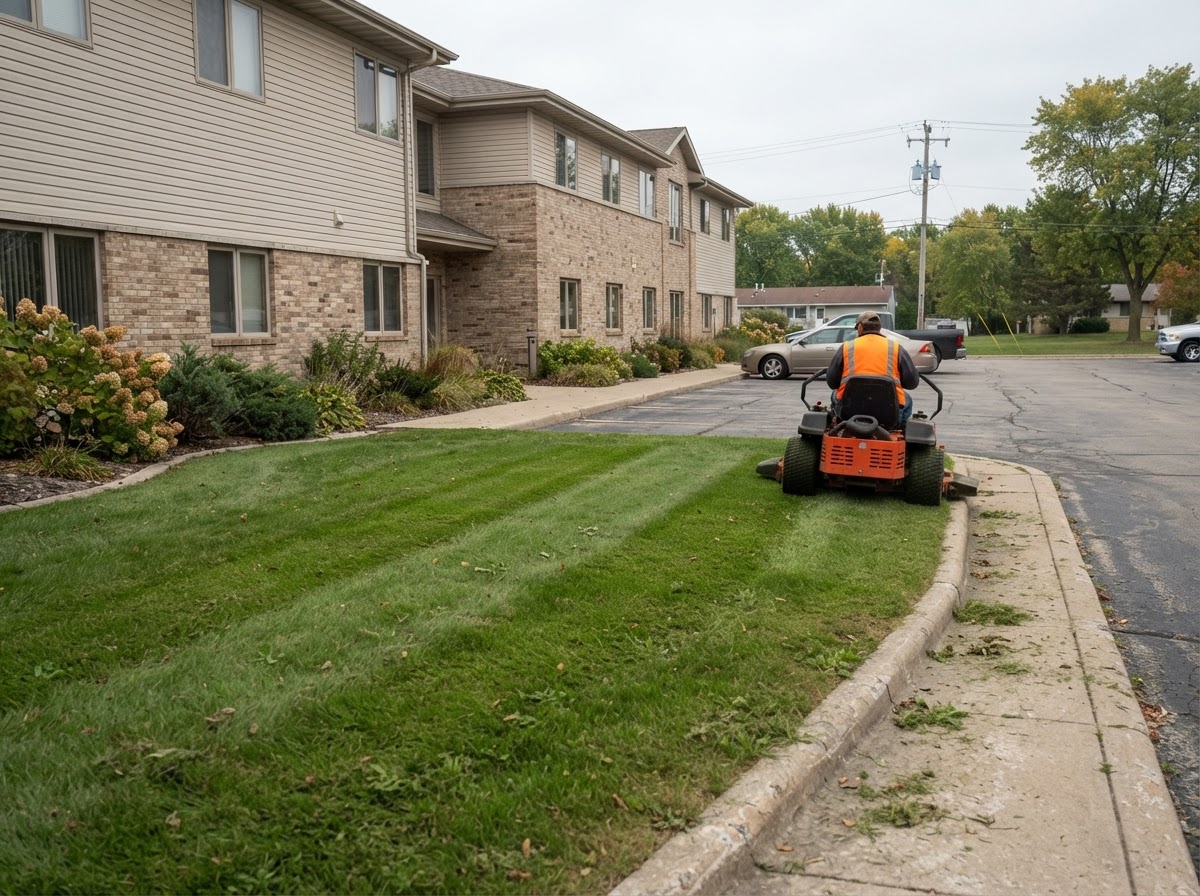
Lawn Mowing & Maintenance
Consistent mowing, trimming and upkeep that keeps grounds clean and professional.
Explore →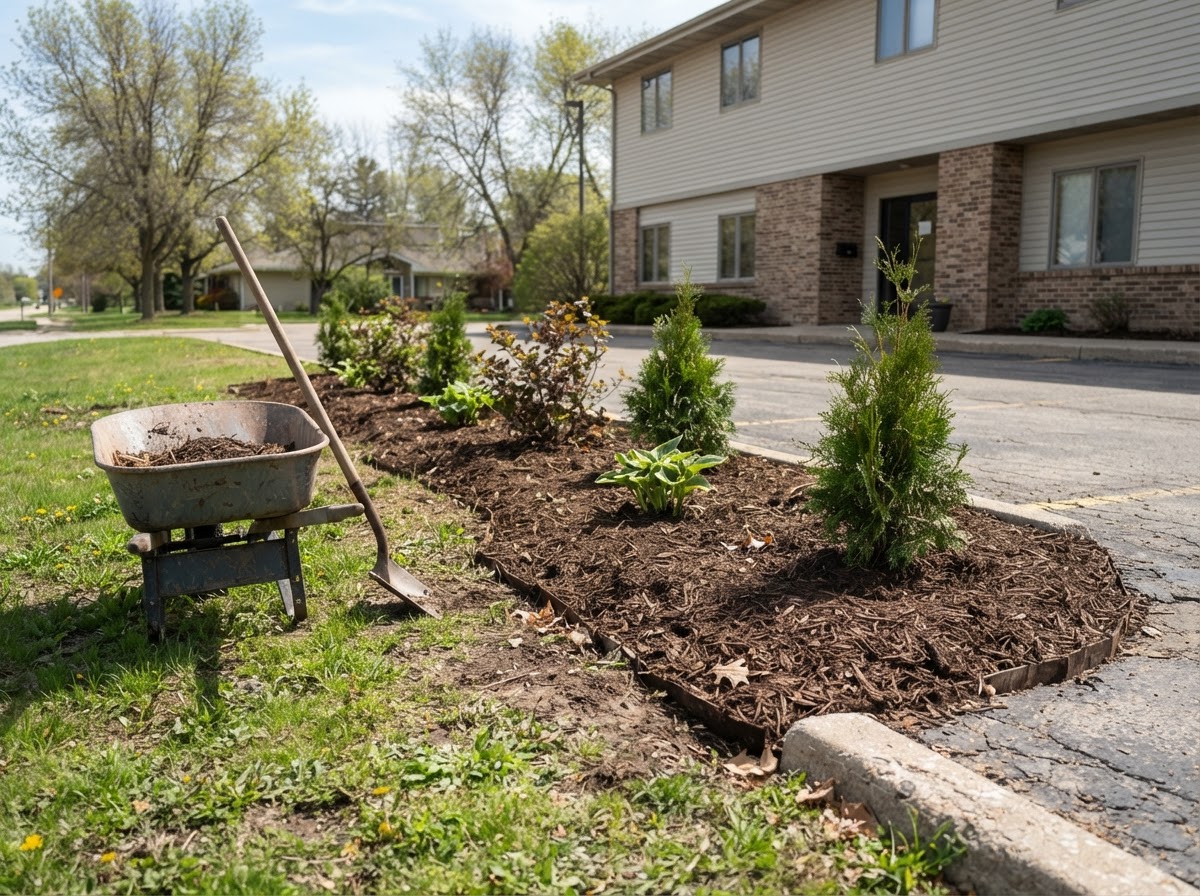
Mulch, Stone & Edging
Fresh mulch, decorative stone and crisp edging that define beds and refresh curb appeal.
Explore →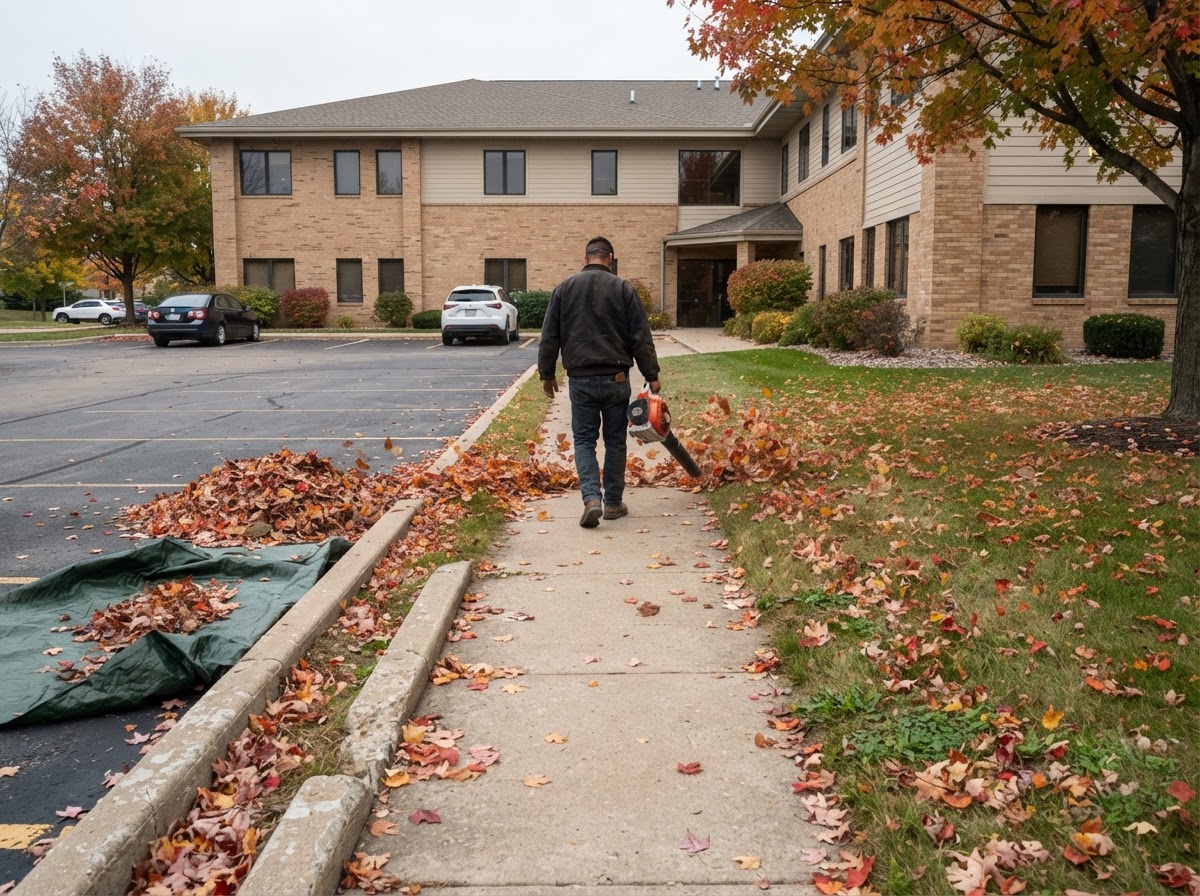
Spring & Fall Cleanups
Seasonal cleanups that reset your property after winter and prepare it for cold weather.
Explore →Let's plan your property
One conversation. A year-round plan.
Tell us about your property and we'll build a coordinated plan for snow and ice, landscaping and irrigation.