
Commercial snow & ice management
Before your business opens, our work is already underway.
A winter team of approximately 50 people and operations leadership backed by 25 years of snow industry experience.
Quick answer
What does commercial snow and ice management include in Fond du Lac, WI?
Commercial snow and ice management coordinates the property's agreed vehicle routes, pedestrian paths, entrances, snow-storage areas and any included ice treatment. A site-specific plan helps managers distinguish those tasks and report changing conditions. Service areas, timing and pricing are confirmed in your plan; no surface can be promised ice-free.
What’s included
Snow & Ice Management
Commercial snow and ice management takes preparation, coordination and people who can make sound decisions as conditions change. Our storm preparation begins roughly 72 hours before an anticipated event.
- Parking lot plowing and sidewalk service
- Ice treatment decisions based on current conditions
- Priority areas: employee entrances, delivery areas, sidewalks, customer parking
- Return visits and ongoing service throughout the event
- Clear contact paths and documented service records
Scope, triggers and pricing structure (seasonal, per-push or hybrid) are confirmed with you in the quote.
How a storm is managed
Preparation starts before the first flake.
72 hours out
We watch the forecast develop and begin preparing personnel, equipment and assignments.
24 hours out
Crews receive reporting instructions based on the latest conditions and the needs of their assigned properties.
During the storm
Leadership makes ongoing decisions on timing, routes and treatment as snowfall develops.
After service
We follow up on concerns and adjust the plan so the next event goes better.
From the cab. Through the storm.
See the work from the operator’s seat.
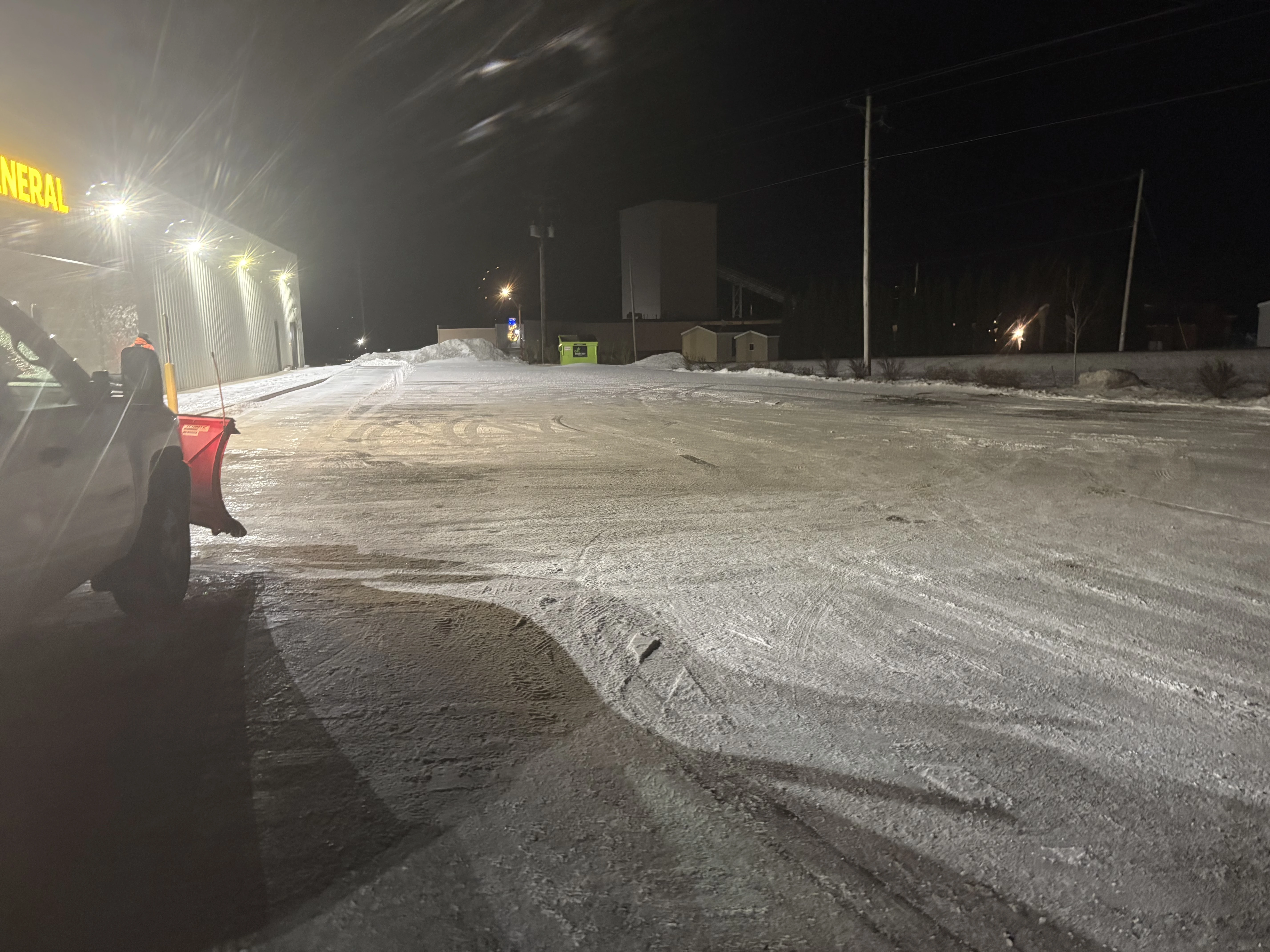
Business entrances cleared overnight, before the doors open.
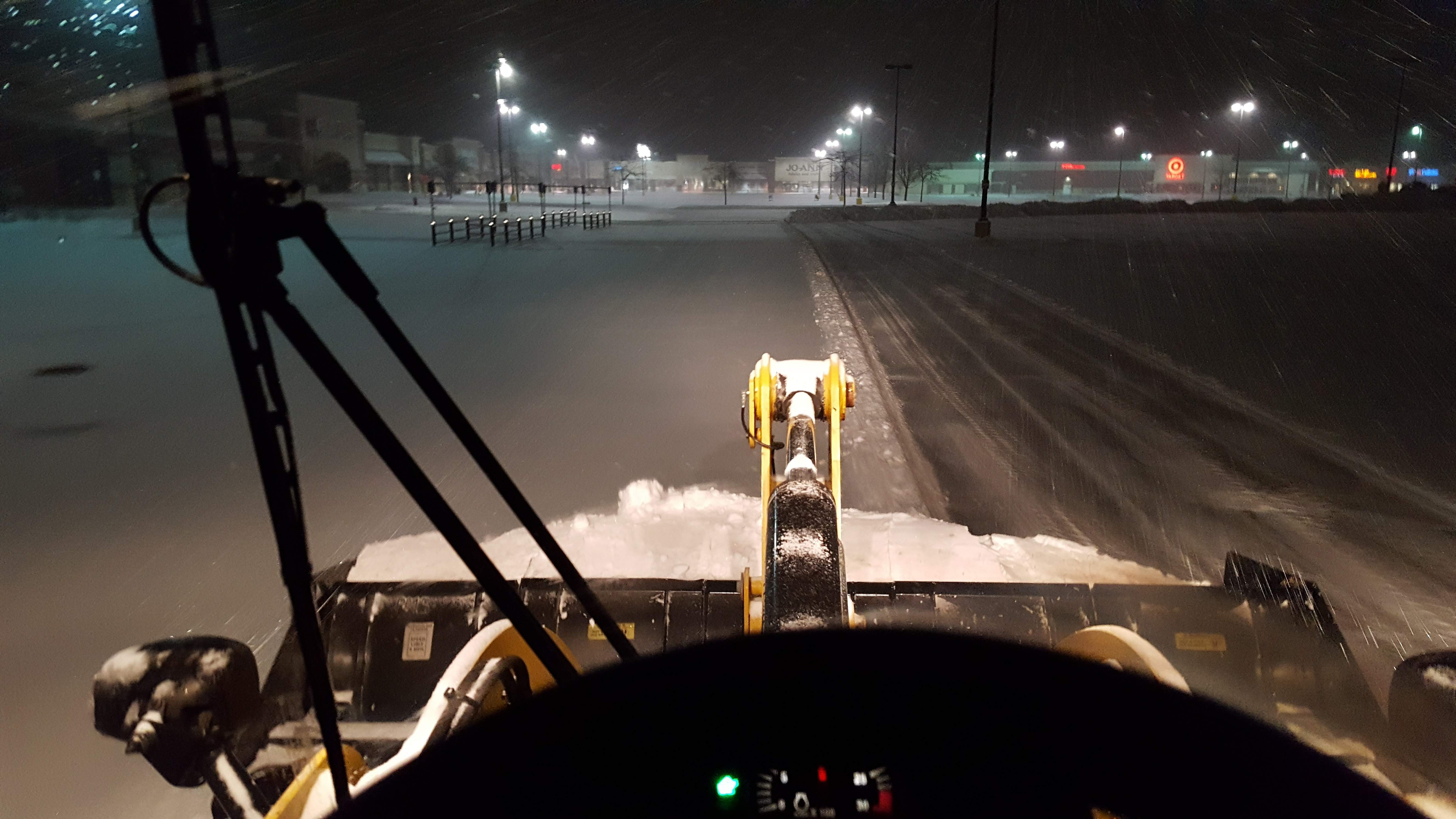
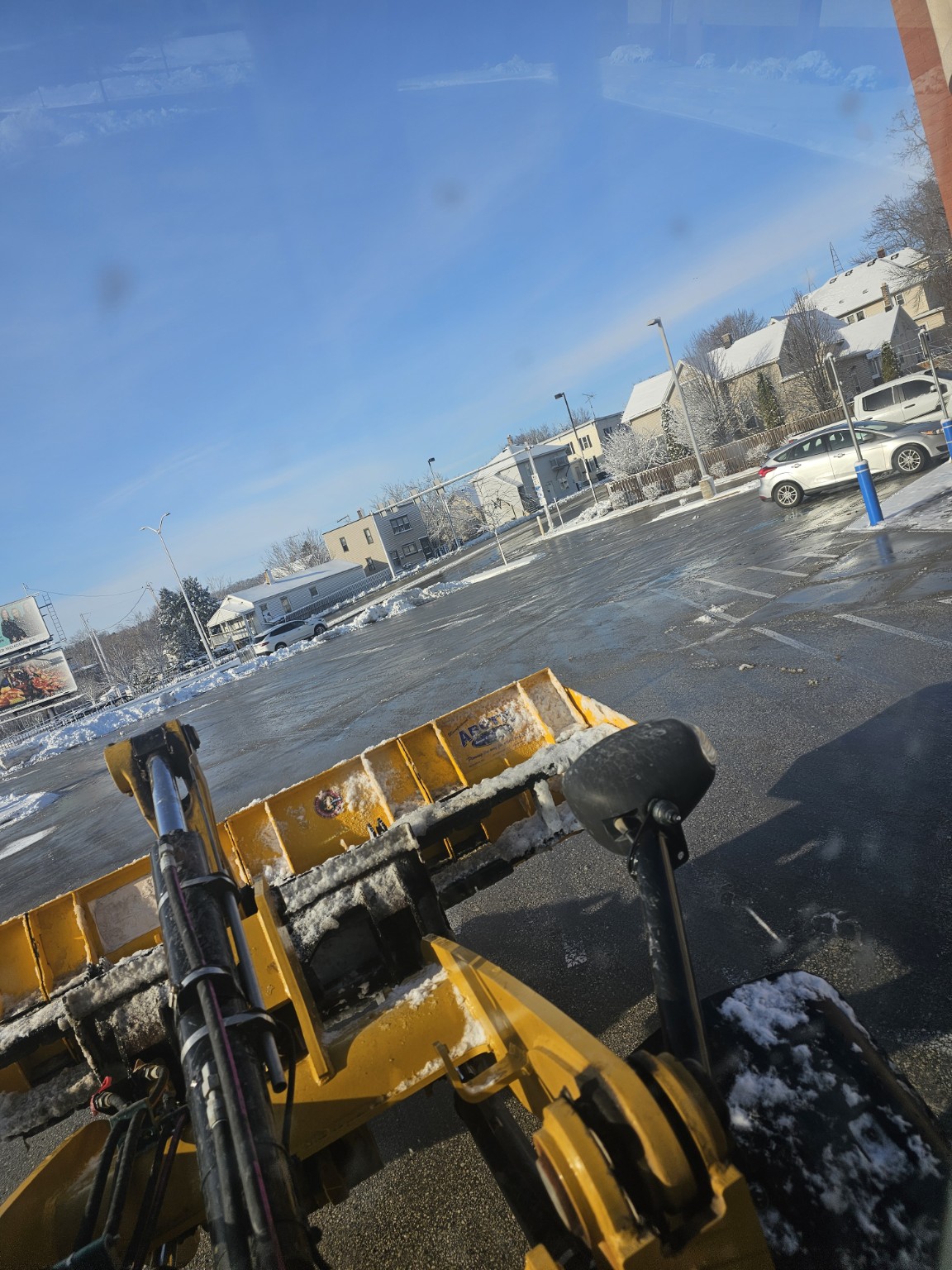
Large lots cleared under the lights, early in the event.
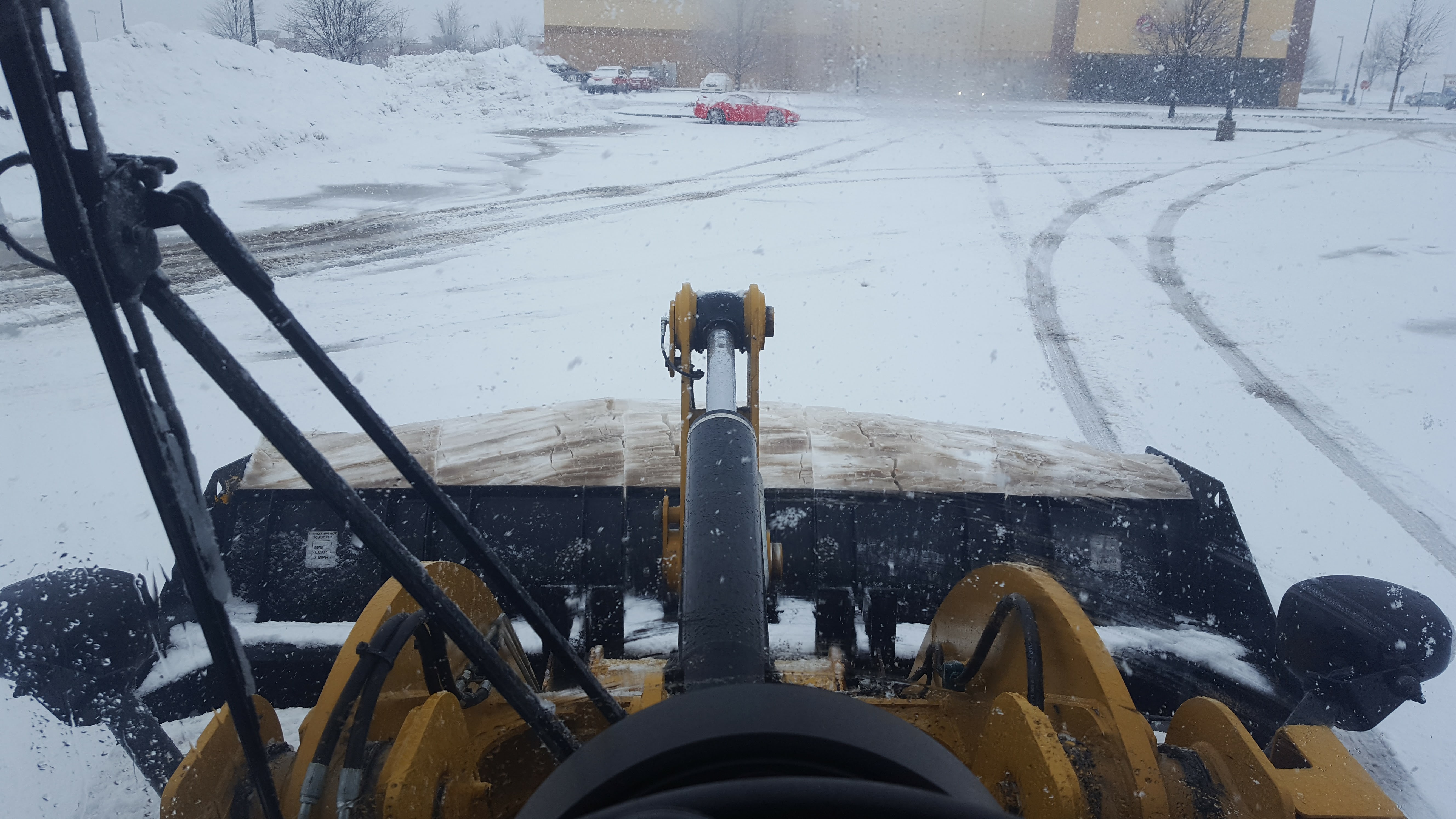
Multiple units coordinated across the same property.
Inside the operation
From the operator's seat.
The view from the cab is where the plan meets the storm. Operators know their priorities, their routes and who to call when conditions change.

Snow equipment. Up close.
Equipment is maintained and staged before the storm, so crews are ready when the call comes.
In the field
From the cab. Through the storm.
Nighttime truck plowing
Trucks working lots while the rest of the community sleeps.
Loader clearing in action
A loader clearing a lot, seen from the operator's seat.
V-plow clearing at night
V-plows opening lanes and entrances overnight.
Plow truck storm run
Plow trucks pushing snow through active winter weather.
Commercial snow and ice management is a property-access plan that must account for changing surfaces, pedestrian routes, vehicle movement and snow placement. Loof's Landscaping and Snow Removal LLC works with property managers to identify operational priorities before winter conditions arrive, then confirms covered areas, timing and pricing in the plan. The goal is a safer property and simpler maintenance handoff—not a promise that weather-related hazards can be eliminated.
25 years
Snow-industry experience in operations leadership
About 50 people
Winter team size
About 72 hours
Storm-preparation lead time begins
Build the site map around movement
Start with the routes people and vehicles actually use. Mark building entrances, accessible paths, sidewalks, parking aisles, loading zones, fire or service access, and transitions between parking and doors. A retail property may prioritize customer approaches; a healthcare site may need a clearly defined arrival route; an apartment community may have several shared walks and entrances. These examples are planning prompts, not a standard package.
Then identify snow-storage areas, tight turns, drainage features, low spots, landscape beds and places where meltwater could cross a walkway. A site map gives the property manager, board and service team a shared reference for priorities and exclusions. It also makes later changes easier to explain: if an entrance closes, a loading area changes use or a bed is renovated, the map and operating instructions can be reviewed rather than relying on an informal assumption.
Make readiness a sequence, not a promise of arrival
The company's winter operation has leadership with 25 years of snow-industry experience and a winter team of about 50 people. Storm preparation begins about 72 hours before an event, and crews receive reporting instructions within about 24 hours. These are company planning facts, not an arrival-time commitment, a clearance deadline or a guarantee that a particular surface will be ready at a particular moment.
Use those milestones to ask how the property's priorities will be communicated and who can clarify a site instruction. The written plan should specify included zones, the meaning of any priority labels, how the property team raises changed conditions, and what timing has actually been agreed. Avoid converting a preparation milestone into an assumed response time. The plan, not a general service-page description, is the reference for scope and timing.
Treat vehicle routes and pedestrian routes separately
Parking lots and drives need circulation, turning space and usable access to loading or service areas. Walks need continuity between parking, entrances and other destinations, including attention to thresholds and narrow connections. A surface can be passable to a vehicle while the pedestrian approach remains difficult, so managers should map and discuss these needs separately. Identify which entries are primary, which walks connect to them and which areas should remain unobstructed.
Winter equipment includes CASE 321F wheel loaders with Arctic Sectional Sno-Pushers, trucks with BOSS V-plows, wheel loaders, dump trucks, Snowrators and John Deere tractors. The list describes available equipment only; the work plan should confirm what equipment and service scope apply to a particular property. Do not infer a machine's attachment, performance or use beyond the equipment description. Ask how the specified work areas and snow-storage instructions will be coordinated.
Separate clearing from ice decisions
Snow removal and ice treatment address different conditions. Ask your provider to identify which surfaces are included in each part of the plan, and how the property team should report a newly observed hazard.
Define the ice-treatment conversation
Mechanical snow clearing and ice treatment are not interchangeable. Traffic can pack snow, and water from melting can later refreeze; shade, drainage and surface use may differ within a single site. Your plan should identify whether treatment is included, which surfaces are in scope and how a change in conditions or a newly observed slick area should be reported. The service description cannot promise an ice-free surface or remove every slip risk.
Wisconsin Extension recommends clearing snow first and using only the amount of deicing material needed. Its guidance notes that salt is ineffective below about 15°F. Deicing chlorides can also harm vegetation and soil and enter surface water and groundwater. These are reasons to discuss material choices and sensitive locations, not instructions for a universal application rate. No rate chart or property-specific product method was verified for this page.
Plan for meltwater, refreeze and landscape edges
A site that appears clear can change when sunlight, shade, traffic and drainage interact. During the planning walk, point out low areas, downspouts or drainage paths, slopes, shaded walks, transitions between pavement and planting beds, and places where snow piles could affect access. These details help the property team identify the locations it wants watched or reported, without assuming an inspection interval or follow-up visit that is not in the plan.
Snow placement deserves a conversation with both the winter and landscape teams. Wisconsin Extension describes plant and soil injury risks from winter salt, and the DNR notes that chlorides can affect water. Where snow storage is near plantings or a drainage route, document the concern and ask how the agreed plan handles the location. Do not assume a particular snow-storage choice, hauling arrangement or treatment method is included unless stated in the written scope.
Match the plan to the property type
For an office, identify employee and visitor entries, pedestrian links from parking and any loading access that must remain coordinated. Retail managers can distinguish customer approaches from back-of-house circulation. Healthcare teams may map the route between arrival areas and building entries; industrial properties may identify vehicle movements and operational access. At schools, churches and community properties, list the shared paths and the people responsible for communicating schedule or access changes.
For apartment communities, HOAs and condo boards, distinguish resident routes, shared parking and any areas with different ownership or maintenance responsibilities. Give one manager or authorized contact responsibility for consolidating instructions where practical. This is a coordination recommendation, not a claim about legal duties. For all property types, confirm which areas are included, snow-storage locations, access restrictions and how decisions are recorded; individual site conditions govern the final scope.
Keep useful records and confirm current requirements
A written service scope and a record of site instructions help a property team review what was included, what conditions were reported and what follow-up was discussed. Snow-industry guidance highlights documentation and site inspections as risk-management considerations. A record should be factual and useful: date or event context, affected area, observation, communication and agreed next action. It should not be treated as proof of a legal outcome or as a substitute for reviewing the property's particular obligations.
No Wisconsin commercial premises-liability rule or sidewalk clearance standard was verified for this page. This content is not legal advice. Property managers should confirm current requirements with appropriate local authorities or qualified counsel, especially where access, public routes or property-specific obligations are involved. Loof's is licensed, bonded and insured in Wisconsin, and is a member of SIMA and the Irrigation Association.
What to prepare and what to ask your provider
Before the seasonal planning conversation, gather a current site plan, entrance and route priorities, access instructions, known drainage or refreeze concerns, and a map of acceptable snow-storage areas. Note sensitive beds, restricted zones and any scheduled property activity that could affect use. Decide who can approve a scope change and who should receive operational updates. For multi-tenant properties or associations, consolidate requests so the provider receives a clear set of instructions.
Ask which walks, parking areas, drives and entrances are included; whether ice treatment or snow hauling is included; how areas are prioritized; what conditions trigger communication; and what timing is expressly covered. Ask how the equipment description relates to the planned site areas, without assuming a capability not specified. Confirm service scope, timing and pricing in your plan. Do not assume response times, visit frequency, application rates or guarantees.
Benefits of professional snow and ice management
Professional snow and ice management protects more than pavement — it protects the people who depend on your property and the business operations that run through it every day. Clear parking lots and walkways reduce slip-and-fall risk during Wisconsin winters, when a single uncleared patch can become a liability. Reliable clearing keeps entrances, loading zones and customer approaches open so businesses stay operational through each storm rather than losing access at critical moments.
Beyond safety, professional service brings consistency and accountability. A documented plan means priorities are established before snow falls, not negotiated during a storm when communication is hardest. Coordinated service across snow plowing, ice treatment and snow hauling means one point of contact instead of three vendors with three different schedules. For property managers overseeing multiple buildings, that single point of contact reduces the daily burden of winter coordination and gives owners, boards and tenants a clear reference for what was done, when and why.
- Reduced slip-and-fall risk — clear walks and parking areas protect visitors, tenants and staff during winter storms.
- Continued business access — entrances, delivery areas and customer approaches stay open through each event.
- Documented service records — a factual account of what was included, reported and addressed for accountability.
- One coordinated plan — snow, ice treatment and snow hauling handled by a single team with shared priorities.
- Proactive storm preparation — preparation begins before the storm, not during the first snowfall.
Commercial properties we serve with snow and ice management
Different commercial properties in the Fond du Lac area face different winter demands. Loof's serves commercial, industrial and apartment properties — we do not service single-family homes or residential driveways. Each property type has its own access patterns, operating hours and safety priorities, and a useful plan names them explicitly rather than applying a generic service template.
- Office buildings — where employee and visitor entries, pedestrian links from parking and shared walks set the tone for the workday.
- Retail centers and shopping plazas — where customer access, parking-lot safety and clear approaches directly affect foot traffic.
- Apartment and multi-family complexes — where resident parking, walks and building entries must stay open and safe through every storm.
- Industrial and commercial facilities — where delivery access, loading areas and operating-hour requirements drive the service sequence.
- Healthcare and school properties — where patient, student and visitor safety demands coordinated clearing of high-traffic approaches.
- HOA and condo associations — where common-area clearing needs clear boundaries and board-level agreement on scope.
The Loof's approach to snow and ice management
Our approach starts before winter arrives. The first step is a property assessment — walking the site to identify entrances, pedestrian routes, parking aisles, loading areas, drainage paths and snow-storage locations. We discuss the property's operating hours, access priorities and any sensitive areas the property team wants protected. That conversation produces a site map and written scope that both sides can reference throughout the season.
Once the plan is set, storm preparation begins roughly 72 hours before an anticipated event, with crews receiving reporting instructions within about 24 hours of expected service. During a storm, operations leadership — backed by 25 years of snow industry experience — makes ongoing decisions on timing, routes and treatment as conditions develop. After service, we follow up on concerns and adjust the plan so the next event goes better. Communication is consistent: you know how to reach us and how concerns are handled. No fabricated guarantees — just experienced crews, clear plans and documented service you can verify.
Why choose Loof's for commercial snow removal
Property managers in the Fond du Lac area choose Loof's because professional commercial snow removal should reduce their workload, not add to it. One point of contact handles snow plowing, ice management and snow hauling, so you are not chasing three vendors for three answers during a storm. Priorities, access instructions and treatment decisions are set before the season starts, and documented service records give you accountability to every property you manage.
Our approach is built on reliable service coordination, attention to property appearance and safety, and customized plans that fit the actual site rather than a generic package. Communication is consistent — you know how to reach us and how concerns are handled. We are licensed, bonded and insured in Wisconsin, and our equipment — CASE 321F wheel loaders with Arctic Sectional Sno-Pushers, trucks with BOSS V-plows, wheel loaders, dump trucks, Snowrators and John Deere tractors — is matched to the size and layout of your property. No invented awards or fabricated statistics: just experienced crews, clear plans and winter service you can verify.
Commercial snow removal planning for Fond du Lac properties
Commercial snow and ice planning starts with how people and vehicles use a site, not a generic list of passes. Commercial sites need different routes identified before winter. Mark entrances, sidewalks, parking aisles, loading areas, drainage paths and places where snow can be stored. Property teams in Fond du Lac and Van Dyne can use a common site map to explain priorities. For a location-specific overview, see commercial snow and ice service in Fond du Lac. The written plan should identify included areas and any ice treatment separately; scope, timing and pricing are confirmed in your plan.
Year-round landscape boundaries and spring observations can inform winter priorities. Ask a provider how snow-storage and drainage concerns will be recorded, who can clarify instructions, and how a newly noticed hazard should be reported. A fall handoff can connect seasonal property cleanup, ongoing grounds maintenance and irrigation winterization planning without assuming that one service includes another. Managers in Rosendale can review their routes against the same priorities. For local service context, explore winter property planning in Rosendale. Confirm which activities are included rather than inferring frequency or response commitments.
Seasonal timing is weather-dependent: winter is when the plan is used, while late-season preparation is a chance to review access, sensitive planting edges and meltwater paths. Ask which surfaces are in scope, what the property team should communicate, how material choices are decided and what records will be available. Wisconsin Extension recommends clearing snow first and using only the deicing material needed; its guidance notes salt is ineffective below about 15°F. This is general guidance, not a site-specific application instruction. Use the related tree and shrub care plan to note sensitive plantings. Teams serving Oakfield can also review commercial snow planning in Oakfield and snow and ice service in Malone. Ask how the plan handles particular concerns; do not assume a guarantee, legal outcome or fixed visit schedule.
Terms property managers should know
- Deicing material
- A product applied to help address ice or snow bonding on a surface. Selection and amount depend on conditions, surface and the agreed scope; use only the method confirmed for the property rather than assuming one material suits every area.
- Snow storage area
- A designated part of a property where cleared snow is placed. Its location can affect access, drainage and nearby plantings, so managers should identify acceptable areas and record any constraints in the site plan.
- Meltwater
- Water produced as snow or ice melts. It can move across pavement or toward low points and may refreeze under changing conditions, making drainage paths useful details to identify during winter planning.
- Refreeze
- The return of liquid water to ice when conditions cool. Shade, traffic and drainage can affect where it occurs; reporting a newly observed slick area helps the property team communicate conditions without assuming a surface can be kept ice-free.
- Site map
- A shared drawing or annotated plan showing relevant property features, such as entrances, walks, parking, drainage and snow-storage locations. It helps the manager and provider define work areas and communicate approved changes.
Frequently asked questions
Questions about this service
Sources: Winter salt injury and salt-tolerant landscape plants; De-icing salts; Slip-and-fall pitfalls; Chloride impacts
Where we provide it
Snow & Ice Management across the Fond du Lac area
We serve commercial properties across Northeast Wisconsin. Choose your location to see how this service fits your property.
- Fond du Lac, WI
- North Fond du Lac, WI
- Oshkosh, WI
- Neenah, WI
- Menasha, WI
- Appleton, WI
- Greenville, WI
- Kaukauna, WI
- Kimberly, WI
- Little Chute, WI
- De Pere, WI
- Green Bay, WI
- Suamico, WI
- Sheboygan, WI
- Manitowoc, WI
Don’t see your location? Contact us — we may still serve your area.
Let's plan your property
A strong winter plan starts with a conversation.
The most effective customer relationships begin before winter arrives. Let's talk about your property.