
Spring · Summer · Fall
Lawn Mowing & Maintenance in Fond du Lac, WI
Consistent mowing, trimming and upkeep that keeps grounds clean and professional.
Quick answer
What should commercial lawn mowing include in Fond du Lac, WI?
Commercial mowing plans define turf areas, mowing height, trimming and edging locations, access needs and clipping handling. Wisconsin Extension recommends about 2.5–3.5 inches for lawns and removing no more than one-third of the leaf blade at a mowing. Confirm included tasks, timing and pricing in your plan.
What’s included
Lawn Mowing & Maintenance
Consistent mowing, trimming and ongoing maintenance keep your grounds clean, safe and professional-looking all season. One crew and one point of contact handle the details.
- Regular lawn mowing
- Trimming and edging along walks, curbs and beds
- Debris and litter clean-up on each visit
- Maintenance scope and schedule set in your plan
- One point of contact for all grounds work
Exact scope, timing and pricing are confirmed with you in your plan.
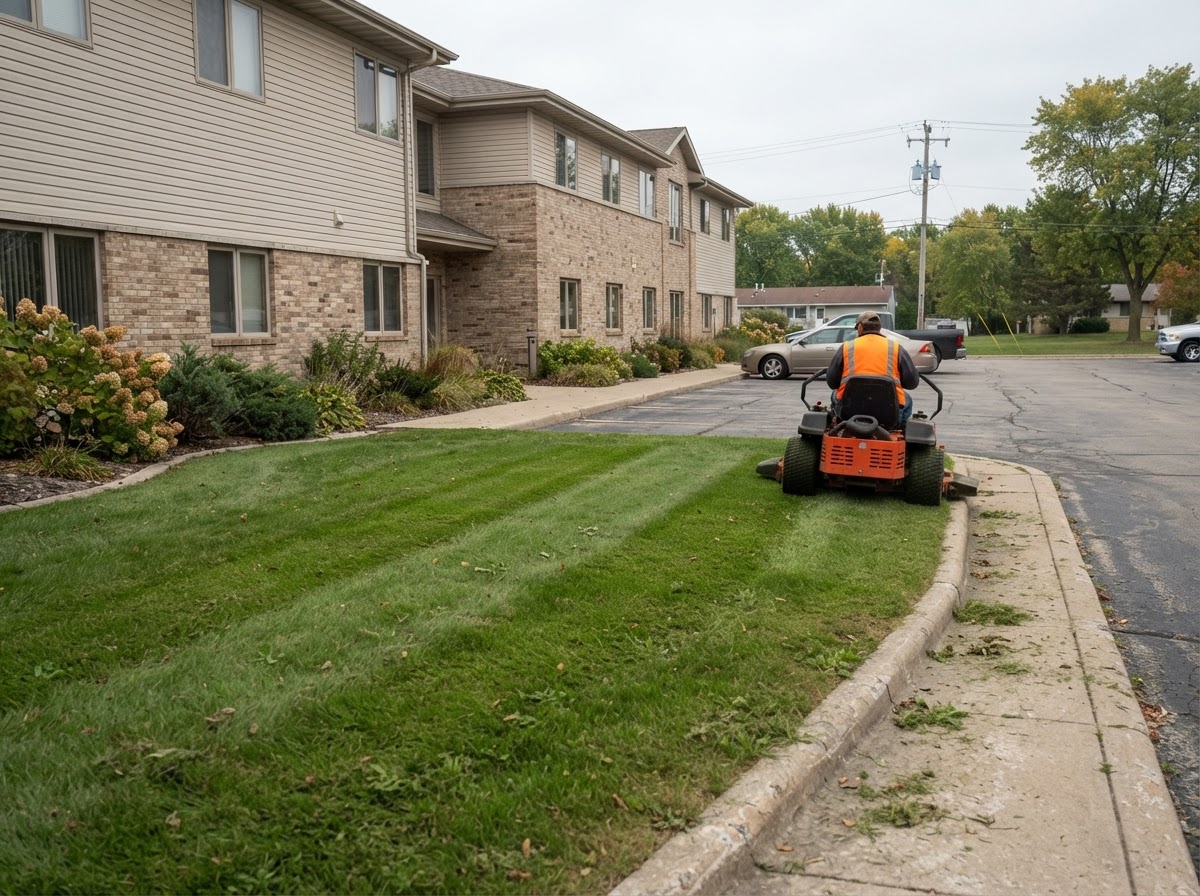
Commercial lawn care is more than cutting open turf: it includes the edges, obstacles and transitions that shape how people move through a property. Loof's Landscaping and Snow Removal LLC helps property managers define mowing, trimming and routine grounds work around the site's use and appearance, with scope, timing and pricing confirmed in the plan. A shared service map gives owners, managers and providers the same picture of what is included.
2.5–3.5 inches
Wisconsin Extension mowing-height guidance for lawns
One-third
Maximum leaf blade to remove at one mowing
25 years
Snow-industry experience in operations leadership
Map the work from the visitor's route
Begin with the routes people actually use: parking to entrance, sidewalk to shared courtyard, or loading area to staff access. Mark the lawn beside those routes, the public-facing approaches, sign areas and less visible perimeter turf separately. That simple map helps the property team decide where a consistent finish matters most and prevents a vague instruction such as 'mow everything' from obscuring beds, retained plantings or restricted areas.
Walk the property with the person authorized to clarify scope. Identify narrow strips, slopes, trees, irrigation components, outdoor equipment and places where mowing access is constrained. Note what should remain undisturbed and how the provider should flag damage, standing water or an area that needs a separate review. The plan can then define locations, work expectations, access and the process for proposed changes without assuming a universal visit frequency.
- Mark high-visibility turf and pedestrian connections.
- Identify obstacles, planted boundaries and areas with restricted access.
- Name the person who can answer scope questions or approve changes.
Set a mowing standard that fits Wisconsin turf
For Wisconsin lawns, Extension recommends a mowing height around 2.5–3.5 inches. Lower settings can suit higher-quality lawns; taller settings can suit lower-input turf. The appropriate target depends on the property's turf and management goal, so a manager should agree on an expectation rather than treating a very short cut as the default sign of care. A consistent standard makes it easier to review the result across different sections of a commercial site.
Use the one-third rule as a practical guardrail: remove no more than one-third of the grass leaf at one mowing. Extension also advises mowing according to growth rate rather than relying on a fixed calendar schedule. When growth gets ahead of the intended height, discuss an adjustment instead of asking for an abrupt cut. The actual timing remains part of the property plan, not an implied weekly or otherwise fixed commitment.
| Decision | Useful manager discussion |
|---|---|
| Mowing height | Choose a target within the documented Wisconsin range that fits turf quality and maintenance goals. |
| Rapid growth | Avoid removing more than one-third of the leaf blade in one mowing; discuss how to manage overgrowth. |
| Timing | Base agreed work timing on site needs and conditions; do not infer a fixed frequency. |
| Clippings | Clarify how clippings are handled in the included areas and whether thick accumulations need attention. |
Separate the cut from the finishing details
Mowing maintains the open turf; trimming reaches around obstacles and edges; edging establishes a line at selected transitions. Those tasks are related but not interchangeable. List which walks, beds, signs, poles and building edges receive detail work, and identify boundaries that should not be cut or altered. A site map can make the distinction visible to a board or facilities team that reviews the plan without walking every section.
Wisconsin Extension notes that grass clippings can be returned to the lawn. Clippings recycle nutrients, and Extension says they do not cause thatch; only clippings thick enough to smother turf need removal. Decide how the site wants this handled rather than assuming that all clippings will be collected or left behind. Alongside the finish standard, clarify how the provider should report a wet patch, exposed irrigation part or damaged edge instead of quietly treating it as a mowing issue.
Some equipment-related care matters beyond the immediate cut. Extension identifies mower and string-trimmer impacts to tree trunks as preventable causes of tree decline. Mark vulnerable trunks and narrow bed borders, and ask how the agreed work will avoid bark injury. No numerical buffer or universal trimming method is asserted here; the property layout and plantings should guide instructions.
Protect tree trunks during routine work
Mowers and string trimmers can injure tree bark, and Extension identifies equipment impacts as a preventable contributor to tree decline. Mark trunks and tight planting edges during the site walk, and agree how those areas are handled.
Build priorities for different property users
A retail manager may emphasize the customer approach and lawn visible from parking; an office manager may prioritize the front entry and shared outdoor space. Healthcare and school properties can have active pedestrian routes to preserve, while industrial facilities may need mowing coordinated with working access. Apartment communities and HOAs may have common lawns, private-use areas and board-approved appearance expectations. These examples illustrate different priorities, not fixed packages or claims that all properties need the same service.
Ask the property team to rank the areas that affect everyday use, then confirm the included zones in writing. Identify times or access conditions that matter to tenants, patients, residents, students or staff, but leave specific schedule commitments to the plan. If a planting renovation, irrigation concern or newly seeded section is present, flag it before work so the responsible people can agree on boundaries and care responsibilities.
Keep fertilizer and weed-control questions separate
Mowing scope should not be assumed to include fertilizing or pesticide applications. Wisconsin restricts phosphorus-containing turf fertilizer, with exceptions that include grass establishment by seed or sod during the establishment growing season, or a soil test completed within the previous 36 months showing phosphorus deficiency. This is a general summary, not legal advice. Property managers should confirm current requirements and the proposed product and purpose before approving an application.
If weed control is proposed, ask what is included, which areas would be treated and what instructions apply to people using the site. Product directions must be followed, and current credential requirements for for-hire pesticide applications should be confirmed with Wisconsin authorities; the research reviewed did not substantiate category-specific licensing details. Keeping these questions distinct from mowing prevents an assumed add-on from becoming an unapproved scope change.
Review the season by observed growth
A useful review asks whether the mowing target still fits the turf and whether the service map remains accurate. Changes in property use, construction, a planting project or new obstacles may affect access and boundaries. During fall, Wisconsin Extension advises mowing as needed until top growth stops. Its guidance also notes that lawns entering winter excessively tall are more susceptible to snow mold and vole damage. These are seasonal considerations, not a fixed final-cut date.
Ask for changes to the plan to be confirmed rather than relying on informal expectations. A short record of the areas reviewed, condition concerns and approved adjustments helps an owner, manager or board understand why the scope changed. Any cleanup, aeration, overseeding, bed work or tree service should be listed separately unless it is specifically part of the agreed maintenance plan.
Prepare the site and ask before approving
Before service begins, provide an accurate property map or walk the relevant areas together. Point out underground or surface features the manager knows about, new seed, irrigation components, tree trunks, drainage concerns, tenant-use zones and any area that should stay undisturbed. For non-emergency digging that may arise in separate landscape work, Wisconsin's Diggers Hotline guidance requires notice at least three working days before excavation; the manager should confirm current requirements and ensure the appropriate party makes the notice before digging.
Ask the provider to identify the included mowing zones, trimming and edging locations, clipping handling, access instructions, reporting process and any exclusions. Confirm who can authorize extra work and how scope, timing and pricing will be documented. Loof's is licensed, bonded and insured in Wisconsin and a member of SIMA and the Irrigation Association. Operations leadership has 25 years of snow-industry experience; that is not a claim about mowing crew size or years in business.
Benefits of professional lawn mowing and maintenance
Professional mowing and maintenance keep a commercial property looking cared for every day of the week — not just the day after a visit. Consistent mowing at the right height encourages denser, healthier turf that resists weeds and tolerates stress better than grass that is cut too short or too rarely. Clean edges along walks and beds give the grounds a finished, intentional look that shapes how tenants, customers and visitors perceive the property before they walk through the door.
Beyond appearance, professional service brings consistency and accountability. A defined plan means the right areas are mowed, trimmed and edged on a schedule that fits the property's use — not a generic calendar. Clippings are handled deliberately, restricted access is respected, and damage or standing water is reported rather than overlooked. For property managers, the benefit is grounds that look maintained without the daily burden of coordinating it.
- Healthier, denser turf — mowing at the recommended height encourages strong, weed-resistant grass.
- A finished, professional look — clean edges and consistent cuts shape first impressions.
- Consistent scheduling — service timed to turf growth and the property's operating hours.
- Protected plantings — mower and string-trimmer damage to tree trunks avoided through clear communication.
- Reported issues — damage, standing water and new stress flagged for follow-up rather than overlooked.
Commercial properties we serve with mowing and maintenance
Different commercial properties in the Fond du Lac area have different grounds-care priorities. Loof's serves commercial, industrial and apartment properties — we do not service single-family homes or residential driveways. Each property type has its own traffic patterns, visibility needs and maintenance boundaries.
- Office buildings — where frontage turf and entry approaches set a professional tone for tenants and visitors.
- Retail centers and shopping plazas — where customer approaches and parking-lot edges need consistent care.
- Apartment and multi-family complexes — where shared lawns serve residents across multiple buildings.
- Industrial and commercial facilities — where grounds must look maintained without disrupting operations.
- Healthcare and school properties — where high-use lawns need care timed around patient, student and visitor access.
- HOA and condo associations — where common-area mowing needs clear boundaries and board-level agreement on scope.
The Loof's approach to lawn mowing and maintenance
Our approach starts with understanding the property. We map open turf, entrances, signs, tree trunks, beds and narrow edges before work begins, and confirm the agreed mowing height, trimming and edging locations, access needs and clipping handling. Wisconsin Extension recommends maintaining lawn height around 2.5–3.5 inches and removing no more than one-third of the leaf blade at any mowing — guidance we follow rather than cutting to a generic schedule.
Through the season, mowing follows turf growth, fall work continues as needed until growth stops, and spring review may flag areas for repair. We handle clippings deliberately, respect restricted access, protect new seed and irrigation components, and report damage or standing water. For planting areas, we communicate vulnerable trunks and new plantings before service so mower and string-trimmer impacts are avoided. Communication is consistent: you know what is included, what is excluded and who to contact. No fabricated guarantees — just experienced crews, clear plans and service you can verify.
Why choose Loof's for commercial lawn mowing
Property managers in the Fond du Lac area choose Loof's because professional mowing should keep grounds looking maintained without adding coordination burden. One point of contact handles mowing alongside aeration, irrigation, bed work and snow — so the grounds plan works as one. Priorities, mowing height and edge locations are set before the season starts, and documented service records give you accountability to every property you manage.
Our approach is built on reliable service coordination, attention to turf health and property appearance, and customized plans that fit the actual site. Communication is consistent — you know how to reach us and how concerns are handled. We are licensed, bonded and insured in Wisconsin. No invented awards or fabricated statistics: just experienced crews, clear plans and service you can verify.
Commercial lawn mowing and maintenance for Fond du Lac properties
Routine grounds care affects the routes and shared spaces used by offices, retail, healthcare, industrial sites, schools, apartment communities, HOAs and condo properties. Map open turf, entrances, signs, tree trunks, beds and narrow edges before work begins. Wisconsin Extension recommends maintaining lawn height around 2.5–3.5 inches and removing no more than one-third of the leaf blade at any mowing. Teams in Eldorado and Rosendale can identify which areas matter most to occupants and visitors. See commercial mowing in Eldorado for a location-specific service overview. The site plan should name mowing, trimming and edging separately so the property team knows what is included.
Seasonal conditions change what the grounds need: mowing follows turf growth, fall work continues as needed until growth stops, and spring review may flag areas for repair. Ask how the provider will handle clippings, restricted access, new seed and irrigation components, and who should report damage or standing water. Connect routine care with aeration and overseeding, flower-bed care and spring and fall cleanup planning without assuming those tasks are bundled. A property team in Eden can also review commercial property mowing in Eden against current boundaries. Scope, timing and pricing are confirmed in your plan; no fixed frequency is implied.
For a useful provider conversation, ask for the included turf zones, agreed mowing height, edge locations, clipping approach, access instructions and a process for proposed changes. If fertilizer or weed-control work is suggested, confirm it separately; mowing does not establish that those treatments are included or appropriate. For planting areas, note that Wisconsin Extension identifies mower and string-trimmer impacts to tree trunks as preventable contributors to tree decline. Communicate vulnerable trunks and new plantings before service. Teams in Brownsville can consider grounds maintenance in Brownsville and commercial mowing in Mount Calvary. Use tree and shrub care to coordinate planting boundaries, then confirm every task in the written plan.
Terms property managers should know
- One-third rule
- A mowing guideline to remove no more than one-third of the grass leaf blade at one time. It helps avoid an excessively severe cut; if turf has grown beyond the target, discuss an adjustment rather than assuming a single cut will correct it.
- Mowing height
- The remaining height of turf after cutting. Wisconsin Extension recommends about 2.5–3.5 inches for lawns, with the target chosen to fit turf quality and maintenance goals rather than using one height for every property area.
- Trimming
- Cutting grass in areas a mower cannot readily reach, such as around obstacles or along selected boundaries. The included locations and approach should be specified so trimming does not disturb plants or other site features.
- Edging
- Creating or maintaining a defined line where lawn meets a bed, path or other surface. It is distinct from mowing and trimming; confirm which transitions receive edging and what upkeep is included.
- Grass clippings
- Cut grass left after mowing. Wisconsin Extension notes clippings can be returned to turf and do not cause thatch; unusually thick accumulations that could smother grass may need separate handling.
Frequently asked questions
Questions about this service
Sources: Lawn maintenance; Fall lawn care and winter prep; Tree problems often are preventable; Wisconsin lawn care calendar; Turf fertilizer restrictions; Lawn care services; Commercial applicator licensing; Homeowners guide
Where we provide it
Lawn Mowing & Maintenance across the Fond du Lac area
We serve commercial properties across Northeast Wisconsin. Choose your location to see how this service fits your property.
- Fond du Lac, WI
- North Fond du Lac, WI
- Oshkosh, WI
- Neenah, WI
- Menasha, WI
- Appleton, WI
- Greenville, WI
- Kaukauna, WI
- Kimberly, WI
- Little Chute, WI
- De Pere, WI
- Green Bay, WI
- Suamico, WI
- Sheboygan, WI
- Manitowoc, WI
Don’t see your location? Contact us — we may still serve your area.
Part of one plan
Related services
Every service fits into the same coordinated, year-round property care plan — one point of contact, one conversation, one documented service record.
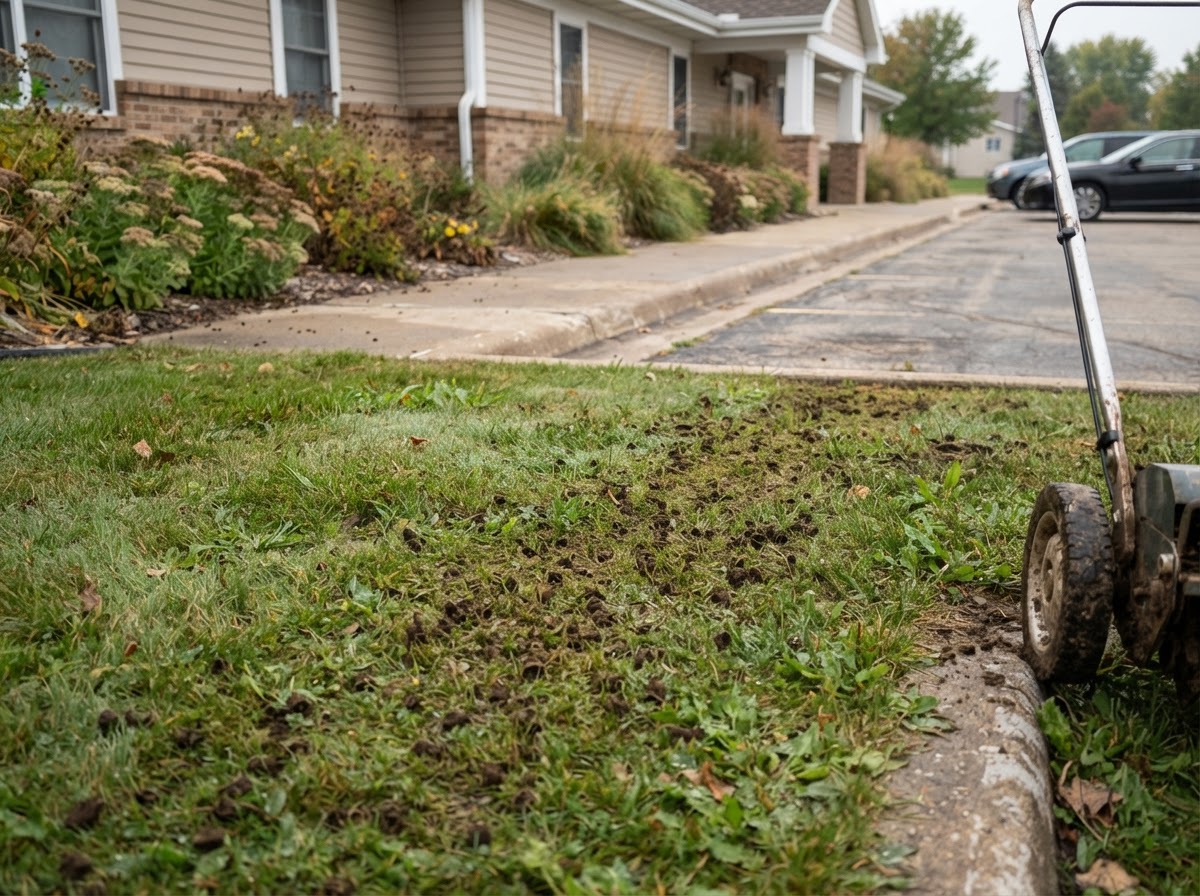
Lawn Aeration & Overseeding
Aeration and overseeding to bring thin or compacted turf back to life.
Explore →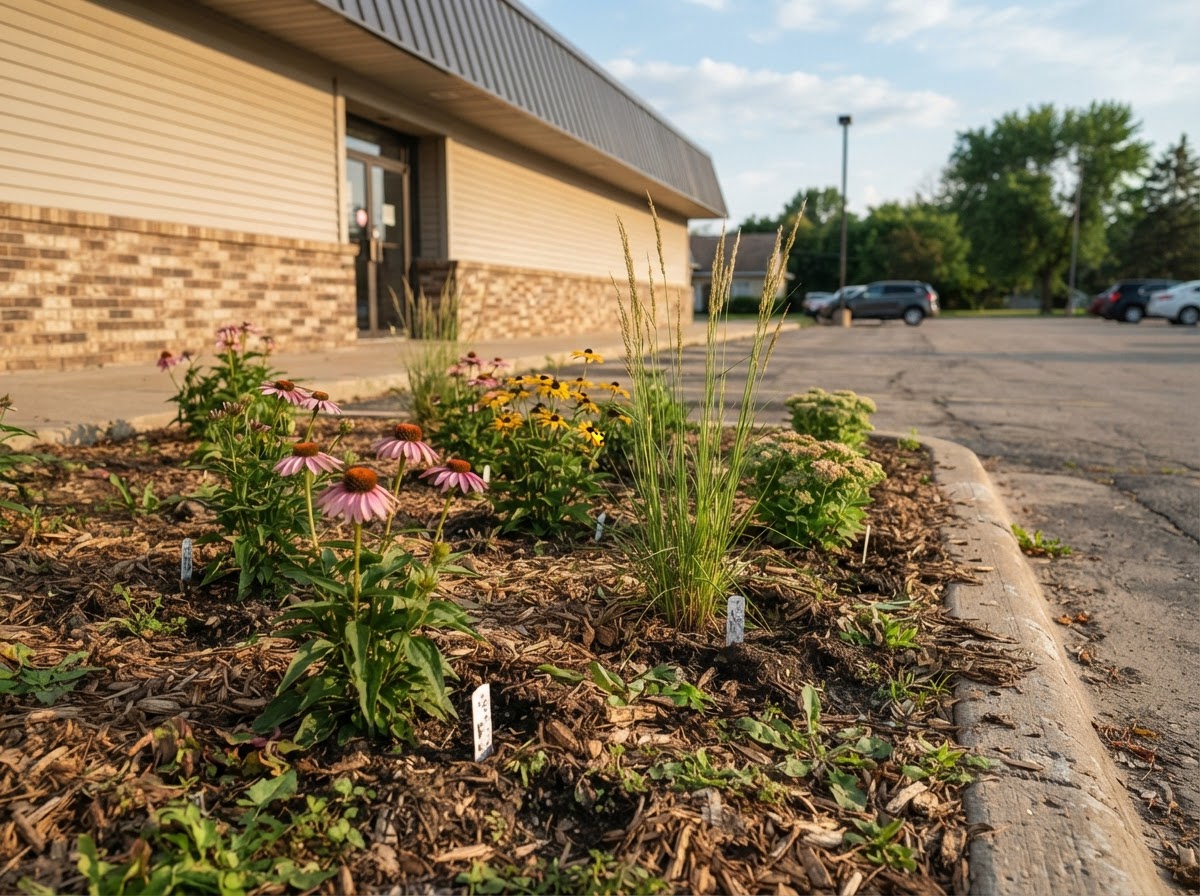
Flower Bed Installation
Seasonal color and well-kept beds that make a strong first impression.
Explore →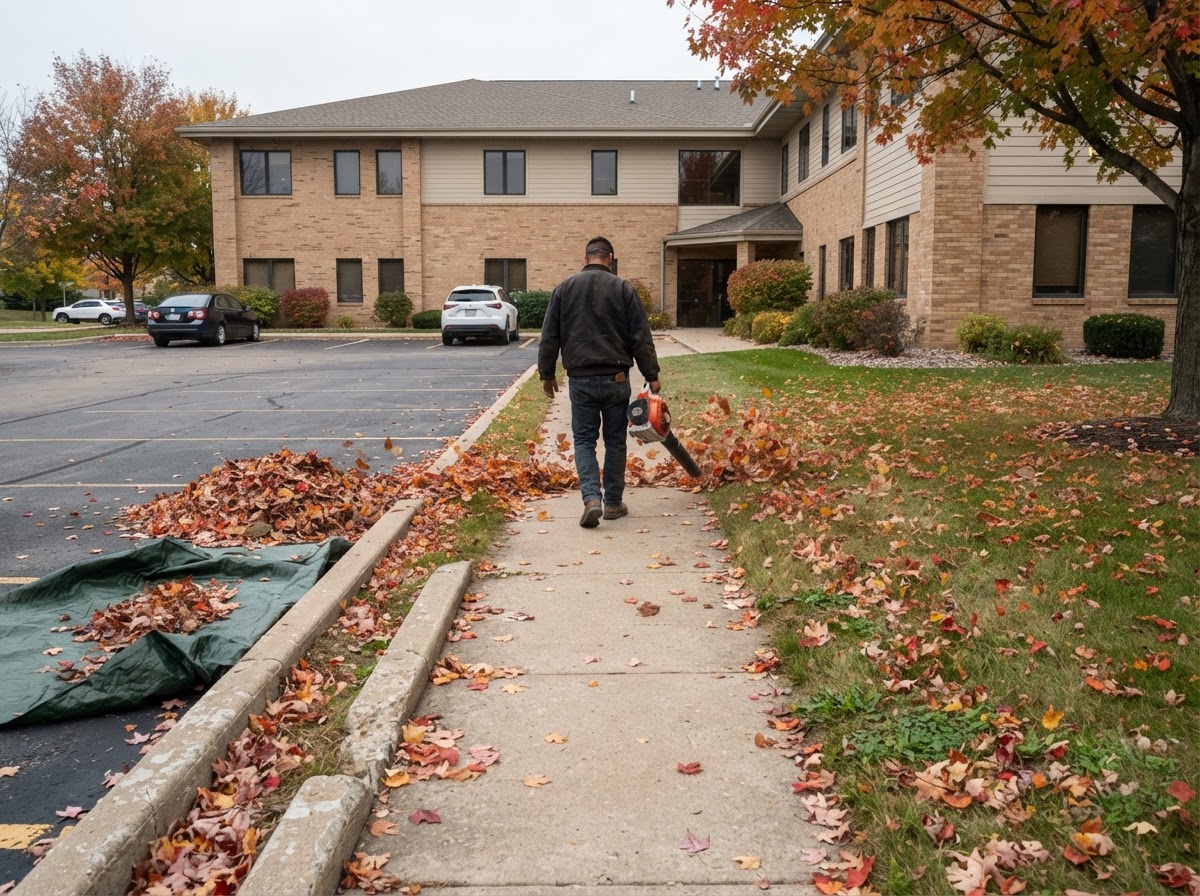
Spring & Fall Cleanups
Seasonal cleanups that reset your property after winter and prepare it for cold weather.
Explore →Let's plan your property
One conversation. A year-round plan.
Tell us about your property and we'll build a coordinated plan for snow and ice, landscaping and irrigation.