
Spring · Summer · Fall
Tree & Shrub Care in Fond du Lac, WI
Planting, trimming and pruning for healthy trees and shrubs and clear sight lines.
Quick answer
When should commercial trees be planted or pruned in Fond du Lac, WI?
Wisconsin Extension identifies spring after ground thaw but before buds swell, and fall after leaves change but before the ground freezes, as preferred shade-tree planting windows. Most deciduous trees are generally pruned in late fall through winter; oaks need dormant-season care. Confirm species-specific timing and scope in your plan.
What’s included
Tree & Shrub Care
Healthy trees and shrubs frame your property. We plant, trim and prune with attention to safety, sight lines at entrances and signage, and plant health.
- Tree and shrub planting
- Shrub trimming and shaping
- Pruning of ornamental trees and shrubs
- Keeping growth clear of walks, signs and entrances
- Debris removal after each visit
Exact scope, timing and pricing are confirmed with you in your plan.
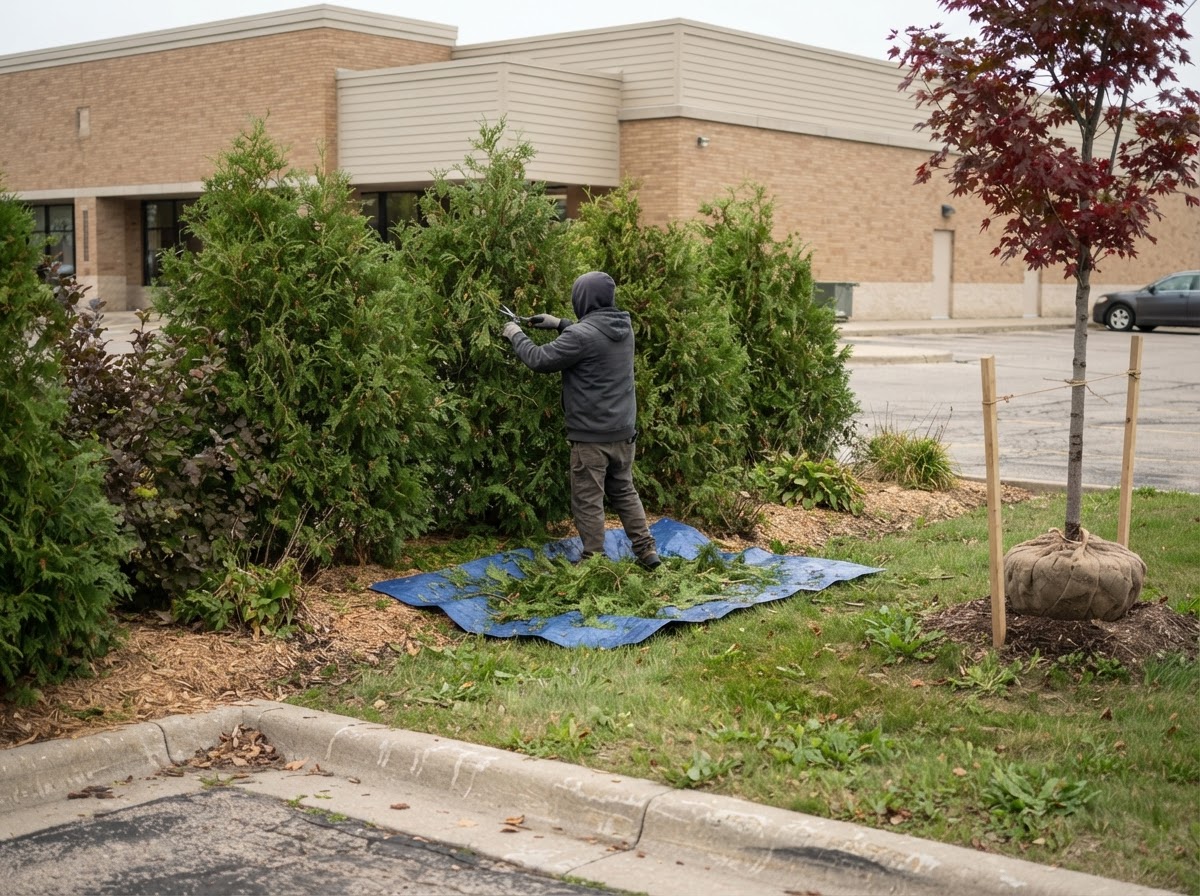
Trees and shrubs contribute shade, structure and clear boundaries around commercial properties, but planting and pruning decisions have to fit the site. They affect visibility, access, plant condition and future maintenance. Loof's Landscaping and Snow Removal LLC helps property managers identify priorities and define the work around the particular trees, shrubs and routes involved, with scope, timing and pricing confirmed in the plan.
Spring and fall
Preferred shade-tree planting windows described by Wisconsin Extension
Dormancy
Oak pruning timing recommended to reduce oak-wilt risk
3 working days
Wisconsin Diggers Hotline notice guidance before non-emergency digging
Inventory the trees and shrubs that matter to the site
Begin with a map of the planting areas and the reasons each needs attention. A manager might be planning a new shade tree, noting a shrub that affects the view of a sign, or tracking a branch concern over a shared walk. Record the location, plant type if known, nearby building and pavement, and how people use the area. Separate new planting, routine shrub shaping and tree pruning into distinct requests so a broad label does not hide different work.
Observe the actual site rather than relying on a universal clearance measurement. The sources reviewed did not establish a numeric commercial standard for clearance around walks, entrances or signs. Identify the property's visibility and pedestrian needs during the site review, then ask the provider to specify which plants and boundaries the proposed work addresses. This is especially useful when an owner, manager or association needs to review and approve a defined scope.
Choose planting locations for mature conditions
A planting location should be considered in relation to buildings, walks, drives, signs, soil, light and drainage—not only the available bed on installation day. Consider how the plant's form may relate to sight lines and pedestrian routes as it grows. If the location is next to a sidewalk or entrance, document the concern and ask how the proposal accounts for it; do not rely on an unsupported standard height or setback.
Wisconsin Extension's planting guidance identifies spring after the ground thaws but before buds swell, and fall after leaves change but before the ground freezes, as preferred shade-tree planting windows. Properly cared-for container or balled-and-burlapped stock can also be planted during the growing season. These are general timing windows, not dates for every plant or property. Confirm the selected stock, actual site conditions and care responsibilities before setting the work date.
Plan the planting handoff, not only the installation
For new trees, the plan should identify the plant and location, site preparation, access, cleanup and who is responsible for follow-up care. Check whether watering can reach the planting and whether irrigation-system work is scheduled nearby. The source material reviewed did not establish a numeric planting depth, root-flare measurement or staking instruction suitable for publishing here, so the installation details should be confirmed for the chosen plant and site rather than guessed.
Mulch is part of the tree-area conversation. Wisconsin Extension recommends a wood-mulch ring 3–6 feet in diameter or larger, with mulch kept off the trunk. The appropriate depth depends on soil: its guidance describes about 4 inches on light, well-drained soils and about 2 inches on heavier clay. Avoid a mound against bark. Coordinate the bed finish with the planting plan and confirm included material, placement and responsibility for later care.
Prune according to the plant and purpose
Pruning can be proposed for a particular concern, visibility or plant condition, but the reason should be explicit before work is approved. Wisconsin Extension says most deciduous trees are generally pruned in late fall through winter, when branch structure is visible and many pests and disease organisms are inactive. This is general timing guidance, not a universal schedule for every tree, shrub or problem. Ask the provider to name the plant and explain why the proposed work is appropriate now.
Oaks need a distinct precaution. Extension advises pruning oaks only during dormancy to reduce oak-wilt risk and avoiding pruning during the growing season. If an oak must be wounded then, its guidance advises immediately covering the wound with paint. This is not a recommendation to schedule ordinary pruning during active growth; it addresses a necessary wound. If a manager notices an oak issue outside dormancy, record its location and ask for a species- and condition-specific assessment rather than requesting a routine cut by default.
Do not let a routine calendar override oak timing
Wisconsin Extension advises pruning oaks only during dormancy and avoiding growing-season pruning. If an oak concern arises outside that window, describe the issue and confirm appropriate next steps instead of assuming a routine trim should proceed.
Treat temperature guidance as a decision point
Wisconsin Extension's seasonal guidance for dormant pruning says not to prune oaks and elms once temperatures reach 50°F, and notes that temperature and pest activity affect the end of the dormant-pruning window. That threshold belongs to the cited guidance; it should not be converted into a fixed calendar date for a particular property. Conditions change from year to year, and a convenient recurring slot does not establish that a plant is in the right pruning window.
A property manager can ask what species is involved, what condition is being addressed and whether the current seasonal window fits the recommended work. The sources reviewed did not verify pruning timing by every common tree or shrub type, or exact oak-wilt restriction dates beyond the cited guidance. Avoid presenting an unverified species schedule as a rule. Confirm current technical guidance and any applicable requirements before authorizing work where timing is uncertain.
Account for winter exposure and landscape stress
Trees and shrubs beside parking areas, walks and roads may be exposed to deicing material or changing snow conditions. Wisconsin Extension documents injury risks from winter deicing salt to landscape plants and recommends salt-tolerant selection as a preventive consideration. For an existing concern, Extension notes soil salt tests or foliar analysis can help with diagnosis and advises collecting soil samples in early spring before rain leaches salts. These are assessment considerations, not a promise that a plant choice will prevent injury.
Wisconsin DNR describes oak wilt as widespread in southern Wisconsin and new or uncommon in much of northern Wisconsin, but that regional description is not a diagnosis for a specific property or county. DNR also states that spongy moth caterpillars feed on more than 300 species of deciduous and evergreen trees; the source does not establish local infestation intensity. Managers should report observed symptoms for assessment and avoid assuming a pest is present based on broad regional context. No Fond du Lac County emerald ash borer status was verified in the research, so none is asserted here.
Make tree work fit the property's daily pattern
A retail property may prioritize sign visibility and the customer approach; an office may focus on branches beside a shared walk. Healthcare, school, apartment and industrial sites may need work coordinated with pedestrian flow, deliveries or operating access. HOAs and condo boards may need to distinguish common-area trees from plantings outside the approved scope. These examples are reasons to map locations and constraints, not a claim that every property needs the same pruning or trimming service.
Before approving a project, identify access needs, where removed material will be handled, which plants are included and what work is excluded. If the proposal affects a walk, entrance or sign, state the property's actual concern and have it addressed in the plan. Tree assessment, storm response, repeat inspections or future pruning should not be assumed unless stated. The written scope gives the manager a practical reference for owners, boards and occupants.
Prepare for a responsible site review
Bring a plant inventory or marked-up site plan, note the purpose of each request, and point out drainage, salt exposure, building edges, signs and pedestrian routes. Ask the provider to distinguish new planting from pruning and shrub trimming, identify the plants involved, explain the proposed timing, and list cleanup and follow-up responsibilities. Confirm who can approve changes if the work reveals a different condition than expected.
For non-emergency excavation, Wisconsin Diggers Hotline guidance says notice must be provided at least three working days before digging; weekends and state legal holidays do not count, and callers are directed to contact 811. Property managers should confirm current requirements and ensure the responsible party completes any necessary notice. This is a summary, not legal advice. Loof's is licensed, bonded and insured in Wisconsin. Scope, timing and pricing are confirmed in the property plan.
Benefits of professional tree and shrub care
Professional tree and shrub care protects the structure, shade and boundaries that woody plants add to a commercial property — and the people who use the space beneath them. Properly timed pruning keeps branches clear of walks, signs and sight lines, removing hazards before they become incidents. Correct planting sets trees and shrubs up for decades of healthy growth rather than a few seasons of struggle. For commercial properties, that means plantings that enhance the site instead of creating risk and maintenance burden.
Beyond safety, professional service brings species-specific timing and accountability. Oaks are pruned only during dormancy to reduce oak-wilt risk; deciduous trees are pruned in late fall through winter when structure is visible. A mulch ring protects the trunk and root zone. The right planting location accounts for mature form, sight lines and pedestrian routes. For property managers, the benefit is trees and shrubs that stay healthy, safe and attractive without guesswork.
- Improved safety and visibility — branches kept clear of walks, signs and sight lines.
- Healthier, longer-lived plantings — correct planting location, depth and mulch ring for mature conditions.
- Species-specific timing — oaks pruned in dormancy; deciduous trees pruned in the right window.
- Reduced disease risk — oak-wilt precautions and dormant-season pruning limit exposure.
- Protected investment — clear follow-up care responsibility so new plantings establish successfully.
Commercial properties we serve with tree and shrub care
Different commercial properties in the Fond du Lac area have different tree and shrub priorities. Loof's serves commercial, industrial and apartment properties — we do not service single-family homes or residential driveways. Each property type has its own visibility needs, access patterns and maintenance boundaries.
- Office buildings — where shade trees and entrance plantings set a professional tone for tenants and visitors.
- Retail centers and shopping plazas — where sign visibility and customer approaches must stay clear of growth.
- Apartment and multi-family complexes — where shared walks and resident routes need branches kept clear.
- Industrial and commercial facilities — where access, deliveries and operating hours drive the work sequence.
- Healthcare and school properties — where pedestrian flow and safety demand coordinated pruning and planting.
- HOA and condo associations — where common-area trees need clear boundaries and board-level agreement on scope.
The Loof's approach to tree and shrub care
Our approach starts with a map of the planting areas and the reasons each needs attention. We record the location, plant type if known, nearby building and pavement, and how people use the area — separating new planting, routine shrub shaping and tree pruning into distinct requests so a broad label does not hide different work. We observe the actual site rather than relying on a universal clearance measurement, and identify the property's visibility and pedestrian needs during the review.
Once the plan is set, we confirm species-specific timing — preferred planting windows, dormant-season oak pruning, and the right window for deciduous trees. We coordinate planting with mulch and edging, flower bed plans and seasonal cleanups, and confirm access, cleanup and follow-up responsibilities. For non-emergency digging, we confirm Wisconsin Diggers Hotline requirements and which party is responsible. Communication is consistent: you know what is included, what is excluded and who to contact. No fabricated guarantees — just a qualified assessment, a clear plan and service you can verify.
Why choose Loof's for commercial tree and shrub care
Property managers in the Fond du Lac area choose Loof's because professional tree and shrub care should protect the site without adding coordination burden. One point of contact handles planting and pruning alongside mulch and edging, flower beds, seasonal cleanups and snow — so the tree plan works as part of one coordinated grounds plan. Priorities, species-specific timing and scope are set before work begins, and documented service records give you accountability to every property you manage.
Our approach is built on species-specific timing, site-appropriate planting and customized plans that fit the actual plants and site. Communication is consistent — you know how to reach us and how concerns are handled. We are licensed, bonded and insured in Wisconsin. No invented awards or fabricated statistics: just experienced crews, clear plans and service you can verify.
Commercial tree and shrub care for Fond du Lac properties
Trees and shrubs influence shade, visibility, access and the character of office, retail, healthcare, industrial, school, apartment and association properties. Start by mapping each plant, its nearby walk or building, the reason for the request and any access concern. Separate planting, shrub trimming and tree pruning so each task has a clear purpose. Teams in Fond du Lac and Van Dyne can use a site review to identify priorities. A service overview is available at commercial tree care in Fond du Lac. Ask the provider to name the included plants and explain the proposed work; do not assume a universal clearance measurement or result.
Timing depends on the work and plant. Wisconsin Extension identifies spring after thaw but before buds swell, and fall after leaves change but before ground freeze, as preferred shade-tree planting windows. Most deciduous trees are generally pruned in late fall through winter; oaks should be pruned only during dormancy to reduce oak-wilt risk. Ask which species and condition are involved and why the proposed timing fits. Coordinate planting with mulch and edging work, flower bed plans and seasonal cleanup coordination. A property team in Malone can consider tree and shrub planning in Malone while confirming follow-up responsibilities and any exclusions.
A year-round grounds plan can connect new planting care with seasonal observation and winter exposure concerns, but pruning or repeat inspections should not be presumed included. Ask what access and cleanup arrangements apply, who authorizes changes, and how the site team should report a new concern. For non-emergency digging, Wisconsin Diggers Hotline guidance says notice must be provided at least three working days before digging; confirm current requirements and which party is responsible. Managers in Oakfield can review commercial pruning in Oakfield and tree planting service in Rosendale. Connect turf boundaries with routine property maintenance and document approved locations, timing and pricing in your plan.
Terms property managers should know
- Dormancy
- A seasonal period when a woody plant's active growth has slowed or stopped. Wisconsin Extension recommends pruning oaks only during dormancy to reduce oak-wilt risk; confirm timing for the species and current conditions.
- Oak wilt
- A serious disease affecting oak trees. Wisconsin Extension advises limiting oak pruning to dormancy to reduce risk; report a concern for appropriate assessment rather than assuming a symptom identifies the disease.
- Deciduous tree
- A tree that typically sheds its leaves during part of the year. Wisconsin Extension says most deciduous trees are generally pruned in late fall through winter, while the specific decision depends on species, condition and purpose.
- Balled-and-burlapped stock
- A nursery-grown tree or shrub supplied with its root ball wrapped for transport. Wisconsin Extension notes properly cared-for balled-and-burlapped stock may be planted during the growing season; suitability depends on condition and care.
- Tree ring
- A broad area of mulch placed around a tree while leaving the material off the trunk. Extension recommends a ring 3–6 feet in diameter or larger, with depth adjusted for soil rather than piled against bark.
Frequently asked questions
Questions about this service
Sources: Tree planting and care; Pruning deciduous trees; Oak wilt; Spring dormant pruning season for woody plants ending soon; Winter salt injury and salt-tolerant landscape plants; Oak wilt; Spongy moth; Homeowners guide; Wood mulch and tree health
Where we provide it
Tree & Shrub Care across the Fond du Lac area
We serve commercial properties across Northeast Wisconsin. Choose your location to see how this service fits your property.
- Fond du Lac, WI
- North Fond du Lac, WI
- Oshkosh, WI
- Neenah, WI
- Menasha, WI
- Appleton, WI
- Greenville, WI
- Kaukauna, WI
- Kimberly, WI
- Little Chute, WI
- De Pere, WI
- Green Bay, WI
- Suamico, WI
- Sheboygan, WI
- Manitowoc, WI
Don’t see your location? Contact us — we may still serve your area.
Part of one plan
Related services
Every service fits into the same coordinated, year-round property care plan — one point of contact, one conversation, one documented service record.
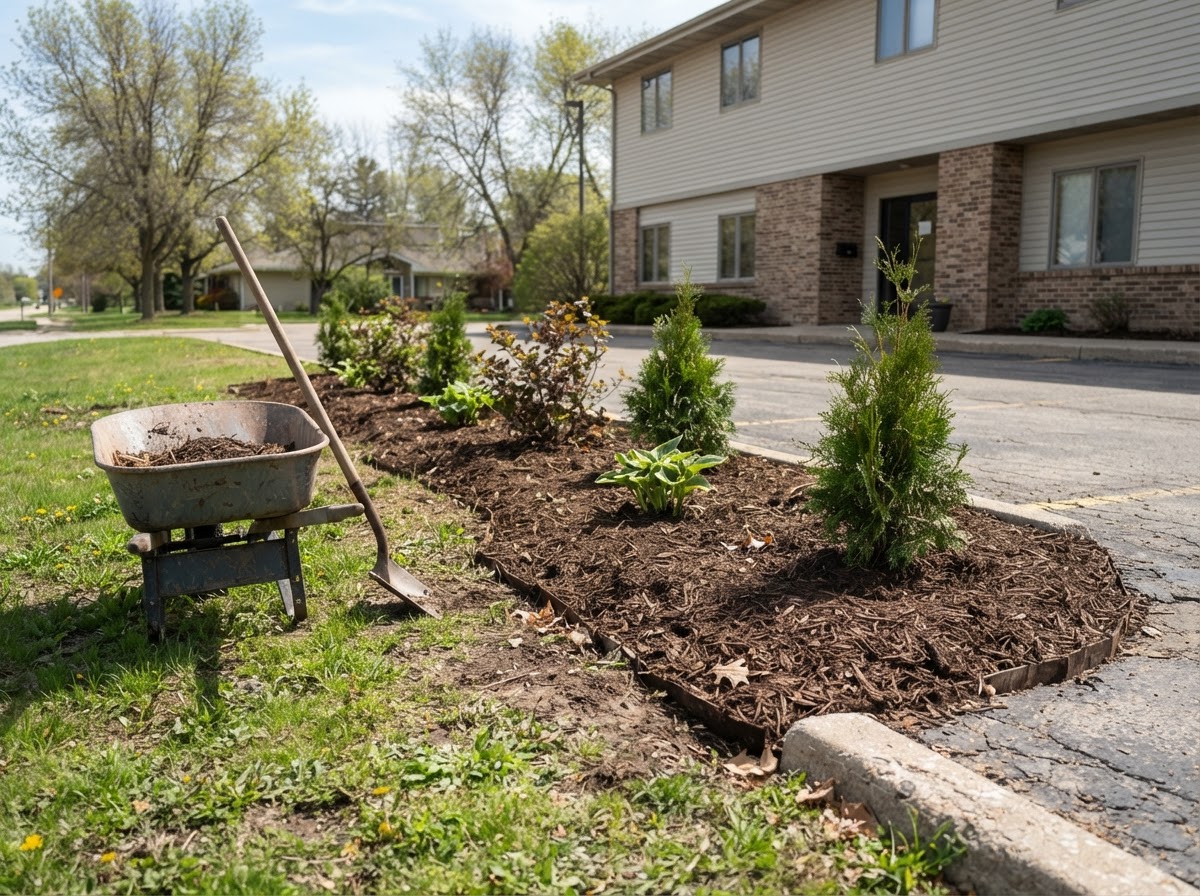
Mulch, Stone & Edging
Fresh mulch, decorative stone and crisp edging that define beds and refresh curb appeal.
Explore →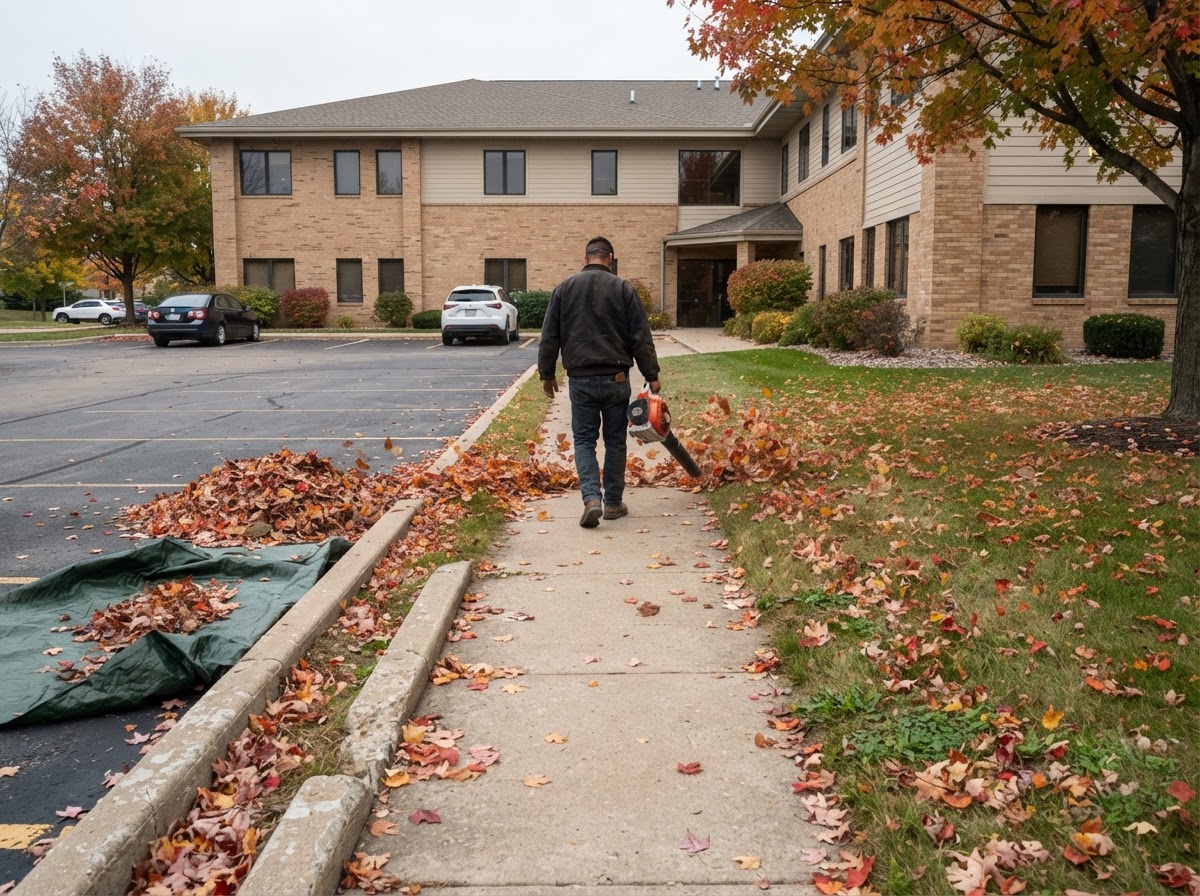
Spring & Fall Cleanups
Seasonal cleanups that reset your property after winter and prepare it for cold weather.
Explore →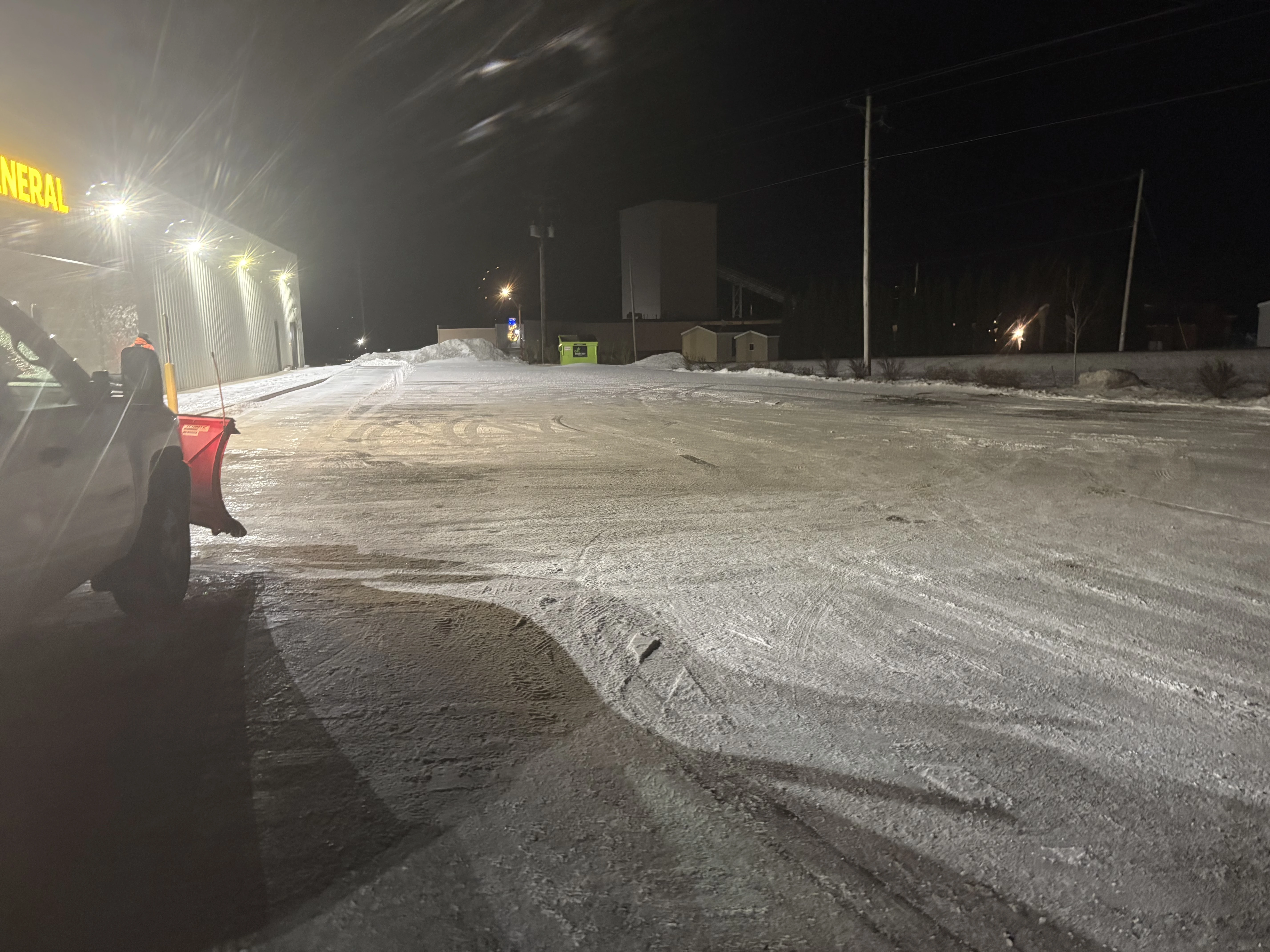
Snow & Ice Management
Plowing, sidewalks and ice treatment, planned before the storm.
Explore →Let's plan your property
One conversation. A year-round plan.
Tell us about your property and we'll build a coordinated plan for snow and ice, landscaping and irrigation.